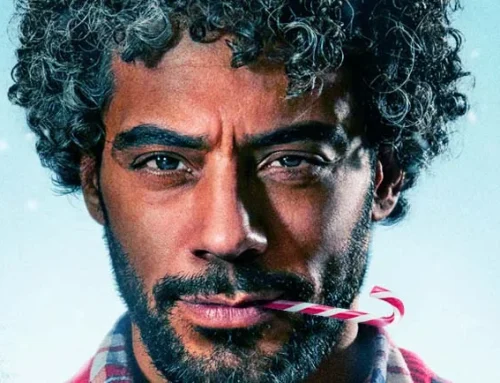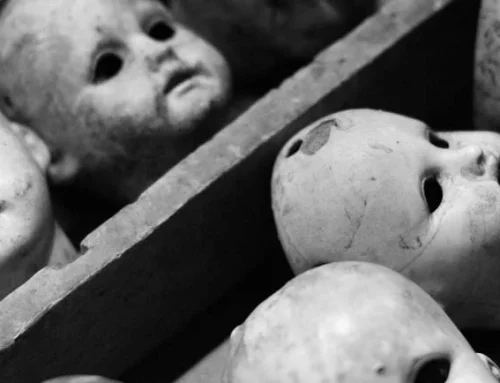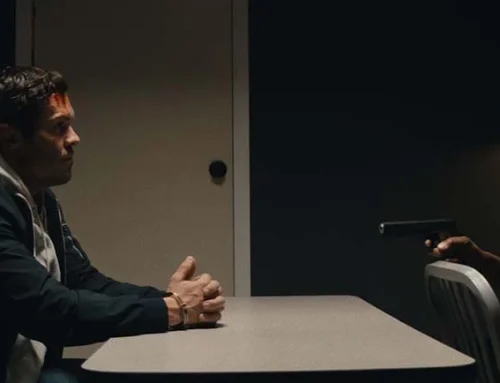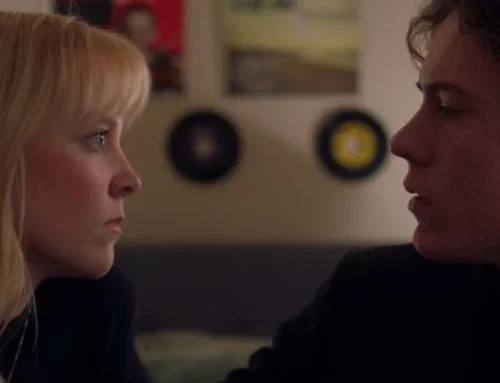
Julie Pacino’s debut feature I Live Here Now is in the midst of an incredible festival run, receiving acclaim across such notable film fests as Fantasia in Montreal and Locarno in Switzerland. Pacino’s hallucinatory horror-thriller excels on several levels, but it particularly benefits from the sumptuous cinematography of DP Aron Meinhardt, who also co-produced the film alongside his longtime collaborator in Pacino.
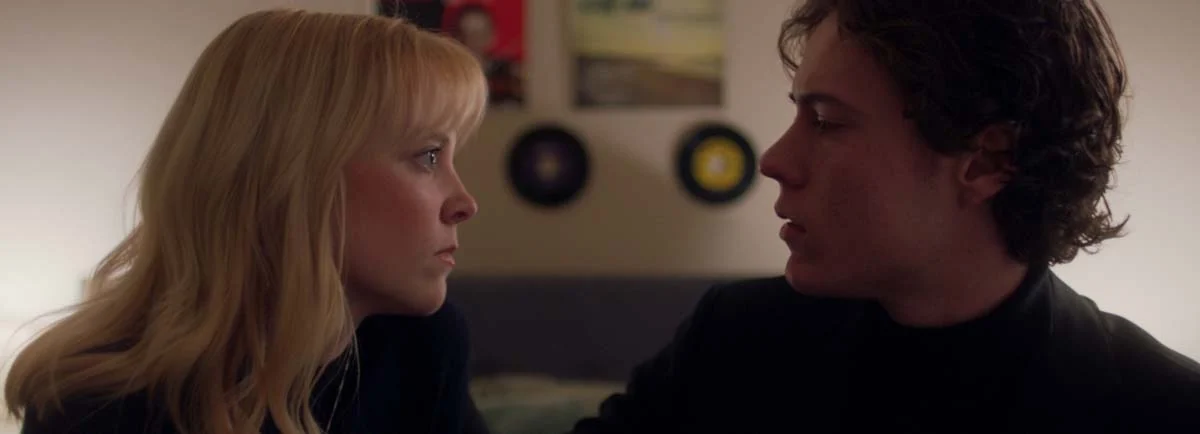
Through a combination of short films and photography experiments, Meinhardt and Pacino have established a strong foundation that serves as the bedrock for the inventive visual language of I Live Here Now. The film follows a struggling young actress named Rose (Lucy Fry), who finds herself trapped in a remote hotel where the dividing lines between her violent past and her anxious present begin to blur. Meinhardt captures Fry – not to mention Madeline Brewer and Twin Peaks legend Sheryl Lee – with striking precision, further accentuated by the creative decision to shoot the vast majority of the film on 35mm. Meinhardt’s mastery of color proves similarly crucial in I Live Here Now. Sunny Los Angeles is refashioned as cold and grim, contrasted with the cautiously inviting warmth of the pinks and reds at The Crown Inn. The film is psychedelic, immersive, and uniquely touching, reaching out to anyone who has ever felt stuck creatively or professionally.
Check out my full conversation with cinematographer Aron Meinhardt below! We dive deeper into his work on I Live Here Now, and tease a couple other exciting projects that he has in the pipeline.
Alix Kingray: Hey Aron! I Live Here Now marks the debut feature of director Julie Pacino, a longtime friend and collaborator of yours. Can you tell us more about your working relationship with Julie and the genesis of I Live Here Now?
Aron Meinhardt: Julie is one of the most collaborative and open directors I’ve ever worked with. I think it is the mark of the extreme confidence she has in her vision, how well she communicates, and her trust in her department heads. I think a lot of first-time directors try to do too much, and don’t make efficient use of all these talented people who are there to support them.
I started working with Julie when we were both living in New York. We started working on projects that she hadn’t written and was hired to direct. Though she’s primarily a writer-director now, this gave us a lot of practice in interpreting a script and crafting a visual language together.
There’s always an element of adaptation in the Director-DP relationship. You have a piece of literature, a script, but you must translate it into a visual medium. So things that worked well on the page may need to work differently on the screen.
We also have a shared interest in photography and I do lighting design for a lot of her photos, which is a great place to experiment and build on ideas. All these things have served us well and gave us a very solid foundation to embark on a film as intricate and ambitious in its visual storytelling as I Live Here Now.
AK: Was the decision to shoot on 35mm and 16mm always there from the start? Why was that so crucial to this film?
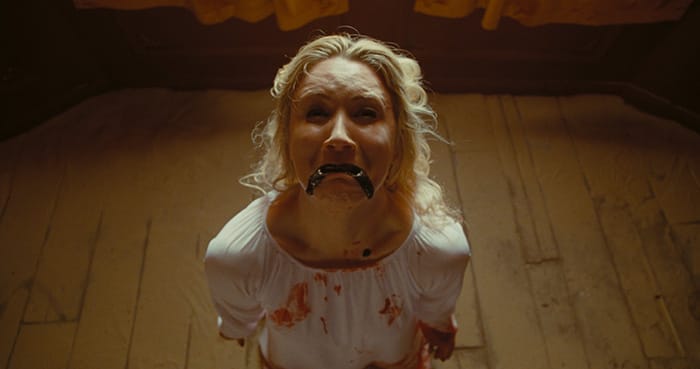
AM: We shot 99% of the film on 35mm, with 16mm being a creative and practical decision for the titles and inserts where we wanted to push the look.
Julie’s photography is like a laboratory for us to experiment with style, mood, lighting, composition. In her photography, Julie is still very narrative and character-minded, so it’s a lot like creating a short film.
Every character needs motivation, desire – even photographs need a beginning, middle, and end. Since she shoots on celluloid, usually 35mm or medium format, we began developing the visual ideas for I Live Here Now on film. So film became synonymous with the visual identity that we build around the movie.
Rose’s surroundings needed to feel organic. Her environment is a character, and film was a huge part of that.
I think film is a very practical decision for independent filmmakers. It elevates the image so much, and helps smooth out the wrinkles you get when you’re working on a limited schedule and budget.
We were in touch with Kodak very early, who have been incredible partners. Thaïs Castralli (who ended up being my operator) put us in touch with Vanessa Benedetti who has been an amazing supporter of the project.
AK: While dark, the film is also colorful and hallucinatory. How did you balance the film’s different tonal elements from a visual perspective?
AM: It was really important that all the decisions about color and visual language start with Rose and what she’s experiencing. As big as things get, I also think the film is very restrained visually. I don’t think you are allowed to go the places that we go unless you really earn it. We were very meticulous about only increasing the visual intensity as the character’s intensity rises.
I think The Wizard of Oz is something that can’t ever be dislodged from our minds – collectively as a culture, and for Julie and I, specifically. We needed to separate Los Angeles from the Crown Inn, and even toyed with the idea of beginning the film in black and white.
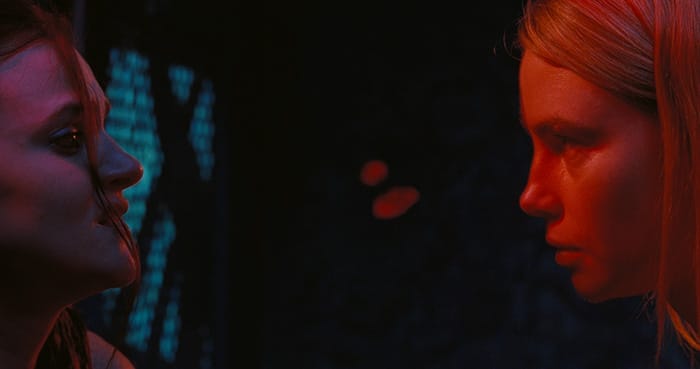
Ultimately we decided on a very cold look. We really wanted to express what Los Angeles feels like as newcomers in our 30s, dealing with a lot of career indecision and struggles. It may be warm and sunny, but the Los Angeles we show is what it feels like on those days where you’re supposed to be happy but you’re not.
When we arrive at the Crown Inn, we live on the other end of the spectrum. Reds and pinks, which are meant to be warm and inviting, but take on a passive aggressive hostility.
AK: I was shocked to see the legendary Sheryl Lee return to our screens in I Live Here Now. What was it like collaborating with such an iconic face in the horror genre?
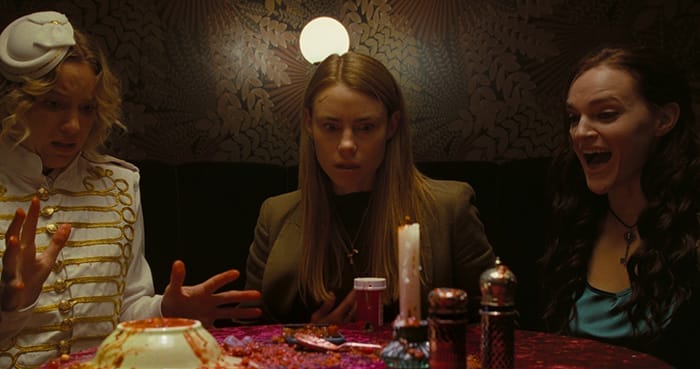
AM: Sheryl Lee was absolutely incredible to work with. One of the first scenes we had with her is at the end of the film, and she showed up to set in character. The first time we made direct eye contact, my blood ran cold. It’s not a joke, I was absolutely petrified. You’ll have to ask Julie about her preparation for that role, but she showed up not as a woman but as a force of nature.
Of course, after she let those demons out, she was an absolute pleasure. One of the sweetest souls I’ve ever worked with, so talented and generous as a performer. It was great that she connected with the script, but I was really touched that she signed on because she really wanted to work with us. And she was a real mentor for so many of us. I know she took a lot of our younger cast under her wing, and she was a real stabilizing force for Julie and me as well.
AK: Madeline Brewer and Lucy Fry also cement themselves as legitimate scream queens with this film, and your camera beautifully captures their wide range of facial emotions. Can you describe the collaborative process between a star and the DP on a film like I Live Here Now?
AM: So much of it is about creating a safe space so actors can feel uninhibited and free in their performance, which is sometimes difficult when shots are very technical, or we need a very specific frame or blocking to communicate something. That became the most essential part of our relationship – finding when and how I could help them and their performance, and when they could help me and Julie with the visual storytelling.
As a DP, it’s also really important to know when to step back and let a performance take over. Frequently our camera movement is very restrained, living in static shots or very methodical movements. There, I had incredible support from my key grip Craig Boydson, operator Thaïs Castralli, and steadicam ops Ben Carrier and William Christensen. We created a really flexible framework of camera movement that could be objective or subjective, and follow the performance.
Lucy Fry is such a powerhouse in the film, so it was our job to follow her lead, create dynamic moments when they’re called for, or let her take the frame for herself. And Madeline is so technical and precise, very professional. I think as a whole cast, there was great chemistry between the actors and the crew. Lara Clear always brings her all, she’s absolutely so powerful yet vulnerable. I love to step back and let her performance pour into the lens. And Sarah Rich is one of the most technical and precise actors I’ve ever seen. There’s such a specificity in her performance that’s a joy to capture. It was really fun to see them weave their talents together and become the inhabitants of the Crown Inn.
AK: What made The Crown Inn the appropriate setting for this story, and how did you and Julie work to establish (and reinvent) the space throughout the film?
AM: Our production designers, Hannah Rawson and Lucie Butler, and their incredible team deserve all of the credit for that. They worked miracles every day, even when the budget and the schedule were against them. Just like everything we were doing with camera and lighting, the spaces had to evolve with Rose.
Because of the limited space in the studio, we even had to build up and tear down sets during filming. The Art department was always helping move wild walls, or even cutting holes in the set for cameras and lights to shoot through. The deal was, as long as I promised we wouldn’t shoot in that direction again, they would cut anything I wanted.
And as the film goes on, damage to the sets becomes an integral part of the film. There was a day where the whole crew was taking a hammer to various parts of the set to complete the look. It was actually super cathartic, and beautiful to share that process of creative destruction.
AK: As someone who has built a career in film, did you learn anything new about yourself or the entertainment industry by shooting a film that is interrogating the industry’s darker side?
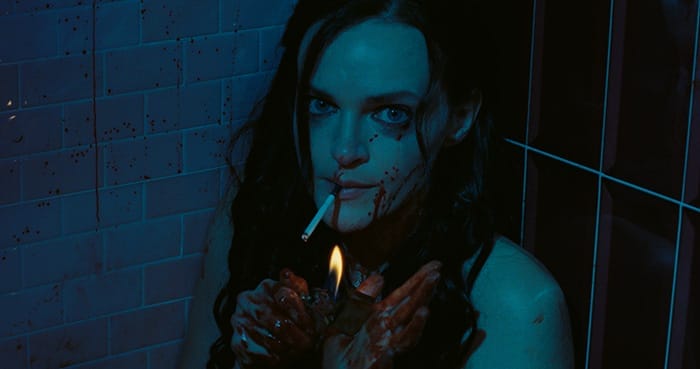
AM: Haha, unfortunately, I don’t think I learned anything new about that. We all poured our traumas into this film. Cara Seymour portrays a very uncompassionate agent, who is a very familiar real-life archetype to many people in the industry. I know my partner, Floriane Andersen, who’s a producer on the project but also a terrific actress, has had those exact words said to her in meetings. As Julie brought in the producers, cast, crew, we all contributed our experiences.
These attitudes and expectations aren’t heightened in this film. They’re tragically real. We love what we do, but it’s a tough industry. We’re playing at Locarno as we’re having this interview, and I know a lot of our team are setting up self-tapes in their hotel rooms, trying to memorize lines, jet-lagged – in between events. It’s all real.
AK: Is there anything else you would like to share with us about I Live Here Now or any other projects you may have in the pipeline?
AM: A dear friend and collaborator, JLee MacKenzie’s film Definitely Gangster is coming to festivals this fall. It’s a very different film than I Live Here Now, an animated feature that’s far more family-friendly. Very funny, very heartfelt. While I’ve DP’ed for JLee in the past, for his animated work, I usually just provide a guiding hand in color, and I was very happy to be able to do that on this project.
I’m very excited about Artak Pictures’ slate. They have a number of exciting projects in post-production and in development, including a couple projects that I’m attached to. They’re definitely a company to keep an eye on.