Before our latest screening at The Frida Cinema this Saturday, October 24th, at 8:30 p.m., for the 40th anniversary of Texas Chainsaw Massacre 2, we have the privilege of screening the short horror film Turno de Noche: The Wrong Place by Spanish filmmakers Juanjo Avi and José Casas.
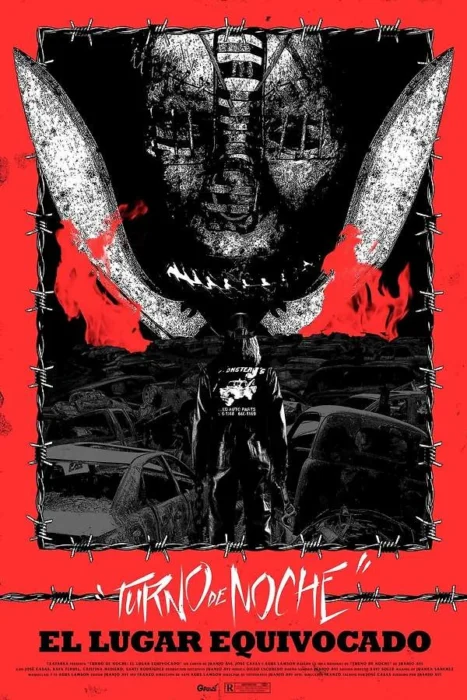
Turno de Noche: The Wrong Place screened at the 2024 Screaming Room Film Festival, winning the Audience Award for the Splattertown film block. Directed by Juanjo Avi and written by José Casas, the film follows J, a watchman (José Casas) during another boring graveyard shift at the scrap yard, until a woman (Cristina Mediero) fleeing a serial killer (Rafa Teruel) makes her way into the scarp yard. With the killer close behind a comedic bloodbath ensues. It’s a nearly twenty-minute blood drenched rollercoaster of horror and comedy that keeps you guessing.
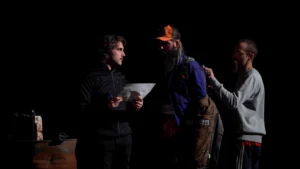
Avi and Casas share with us what inspires them, how they create a balance between comedy and horror, and what they hope audiences will take away from their work.
What films or filmmakers serve as an inspiration for you?
The essence of this project stems from the inspiration of directors like Robert Rodriguez or Quentin Tarantino; films such as El Mariachi, From Dusk till Dawn, or Kill Bill; and action movies by directors like John McTiernan or John Woo. And, of course, horror cinema: films like Halloween, Friday the 13th, or the Evil Dead saga helped us shape our movie. Our film is a clash of villains—much like Freddy vs. Jason—in which the supposed hero is, in fact, an antihero.
How did the two of you meet?
We met through mutual friends. We started talking about cinema, and it turned out our tastes aligned quite well. José starred in the prequel to this short film, Turno de Noche (2018), and from there, we began working together professionally on music videos—such as “Casi Famosas” for the band Uniforms, and “Los Juegos del Hambre” for Atomic Lemons. Later, we spent a lot of time discussing how to further develop the character of J, the “Scrapyard Watchman”. José presented the script, and we dove straight into the pre-production of Turno de Noche: The Wrong Place.
This short film reminds me of The Texas Chain Saw Massacre, spaghetti westerns, and kung fu movies. Did these works serve as inspiration?
We love that our short film brings all of that to mind; it’s practically impossible for something boring to come out of a mix like that! We were certainly inspired by those genres and films like The Texas Chain Saw Massacre, though we also drew from many others—especially action and exploitation cinema, such as Universal Soldier, Demolition Man, El Mariachi, Kill Bill, or even The Legend of the 7 Golden Vampires. And, of course, the western is present—more in terms of the atmosphere associated with the genre than the narrative itself.
Your film is both terrifying and funny. How do you strike a balance between comedy and horror?
We blended genres to create the kind of film we ourselves would want to watch. Our movie unfolds in several acts: it begins as an homage to the slasher genre, transitions into a brief, more comedic domestic scene, shifts into action, and concludes with horror and suspense sequences in a “grindhouse” style. We love action cinema, but we are truly passionate about the combination of horror and comedy. We both adore Evil Dead II, —the way Sam Raimi blends horror with delirious comedy is incredible. That said, the humor in our film leans more toward the style of Robert Rodríguez or Quentin Tarantino, where the comedy isn’t necessarily deliberate, but rather stems from exaggeration—much like in a film such as Machete.
How long did it take to make the film?
It took us about a year and a half to finish the project, involving roughly eight to ten days of actual shooting. This was because we lived in different cities, and some of our crew members had full-time jobs outside of the film industry.
What do you want the audience to feel after watching your film?
We enjoy the sense of unease that certain scenes evoke—it’s what we ourselves look for when watching a horror movie or a particularly unsettling scene. At the same time, we love it when people laugh and have a good time; even though the comedy is quite subtle, we are firm believers in cinema as pure entertainment. There’s no underlying social commentary—we simply want the viewer to forget everything happening outside the screen and focus entirely on having a good time. No more drama, only entertainment.
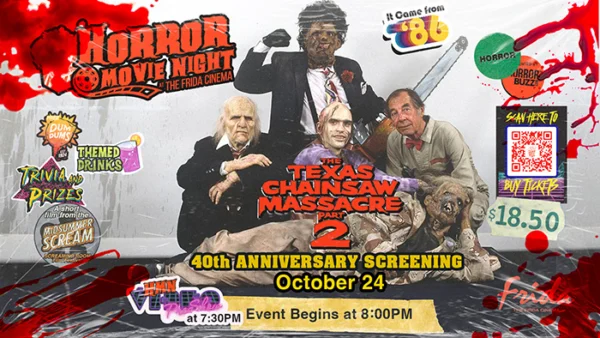
Grab Tickets Here
Author’s note: Interview translated from Spanish.