Something has shifted in the horror genre, and it’s not just the body count.
After years of being treated as the bargain basement of mainstream cinema, horror has become the place where the most interesting filmmaking is happening right now. The numbers back it up. The top four horror films of 2025 grossed a combined $1.4 billion worldwide, and that wave has carried into 2026 with no sign of slowing. More striking than the box office figures, though, is who is making these films and where they are coming from.
The directors driving the resurgence share an unlikely background: comedy. Jordan Peele started on sketch television before Get Out made the Academy pay attention to horror for the first time in decades. Zach Cregger was a founding member of the sketch group The Whitest Kids U’ Know before Barbarian and Weapons turned him into one of the most talked-about filmmakers working today. And then there are Danny and Michael Philippou, the Australian twin brothers who built a massive following on YouTube through their horror-comedy channel RackaRacka before making Talk to Me on a $4.5 million budget and watching it become A24’s highest-grossing horror film at $91.9 million worldwide.
The Philippou Brothers: From RackaRacka to Genre Auteurs
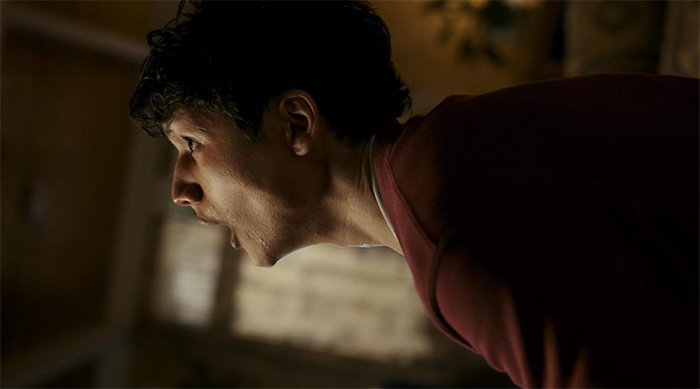
Talk to Me announced the Philippou brothers as something more than clever low-budget filmmakers. The film’s premise, teenagers using a severed embalmed hand to contact spirits as a kind of social game, felt native to the social media age in a way that most horror films that try to tackle Gen Z don’t. It was visceral and smart, and audiences responded to it with the kind of word-of-mouth that studios spend hundreds of millions trying to manufacture.
Their follow-up, Bring Her Back, arrived in May 2025 with a $15 million budget, Sally Hawkins in the lead role, and an 89% critics score on Rotten Tomatoes. Critics described it as sitting in the company of early Ari Aster. The film earned $39 million worldwide, solidifying the brothers’ standing not as one-hit wonders but as a genuine creative force in the genre. With Talk to Me 2 in development and another original project in the works, their trajectory is one of the most compelling in modern horror.
Obsession and the YouTube-to-Hollywood Pipeline
The Philippous are not alone in this path. If Bring Her Back confirmed a trend, Obsession has turned it into a movement.
Directed by 26-year-old Curry Barker, who built his career on the YouTube channel That’s a Bad Idea, Obsession cost roughly $1 million to produce, screened in the Midnight Madness programme at TIFF in September 2025, and was acquired by Focus Features for over $14 million. By the time it opened wide in May 2026, it had already accumulated a reputation as something special. It earned $16 million in its opening weekend across 2,615 theaters, sitting at third place domestically despite competing against major studio releases. In its second weekend, it did something virtually unheard of in modern cinema: it increased its box office take by 30%, growing from a $17 million debut to roughly $22 million the following week.
The critics score on Rotten Tomatoes sits at 95%, matching the audience score. Barker’s film, a dark and often very funny cautionary tale about a man who gets exactly what he wishes for in the worst possible way, has drawn comparisons to Barbarian, and the director himself has been handed the keys to A24’s upcoming Texas Chain Saw Massacre adaptation as his next project. For a filmmaker who was making $800 YouTube shorts just two years ago, the ascent is remarkable.
Why Comedy Makes Great Horror
Asked about the connection between his comedy background and his approach to horror, Barker put it plainly: “There’s a darkness in comedy. As a comedian, you’re constantly studying the human condition, studying how you can make fun of humans. When you’re always studying the psychology of why people do things, that lends itself really well to horror.”
It’s a pattern that holds across all of these filmmakers. Horror and comedy share mechanics: timing, subverted expectation, the release of tension. The best horror films of this cycle tend to be genuinely funny until they are not, and the moment the comedy cracks is where the dread floods in.
A Golden Moment
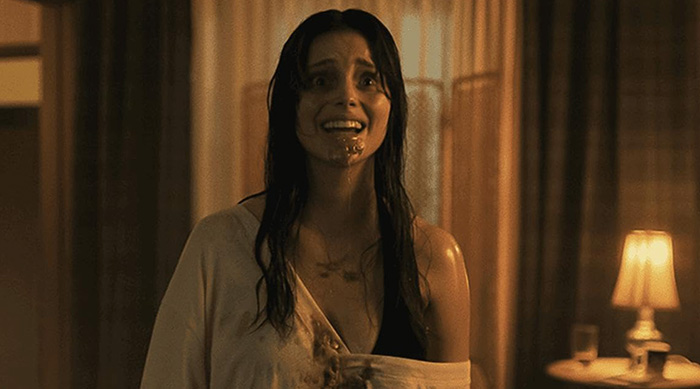
What separates this current run from previous horror cycles is the institutional buy-in. Blumhouse and A24 figured out a decade ago that low budgets, creative risk and strong word of mouth was a viable model. What they may not have anticipated was that this approach would eventually attract directors capable of genuine cinematic ambition, not just clever premises. Sinners, Ryan Coogler’s 2025 period horror film, generated 20% of its domestic revenue from IMAX screenings. Horror films are filling premium-format seats that used to belong exclusively to superhero tentpoles.
The genre has also expanded its cultural footprint well beyond the multiplex. Horror’s mainstream surge has driven a parallel boom in multimedia entertainment built around the genre: horror-themed console games, interactive streaming experiences, and online casino adaptations of iconic franchises have all grown alongside the films themselves. Platforms like Gambling.com, home of the best sweepstakes casinos, have noted the crossover appeal of horror-adjacent games and online casino titles, with themed slots and interactive experiences tied to horror IP now a staple of the digital gaming landscape. The same audiences lining up for Obsession and Bring Her Back are spending time across all of these formats, reflecting just how far horror has moved from a niche genre into a full lifestyle category that touches entertainment in every corner of popular culture.
For anyone watching closely, this feels less like a boom and more like a structural shift. Horror has become the place in Hollywood where directors are given real creative latitude, where audiences are hungry and loyal, and where a filmmaker with a strong idea and a YouTube channel can, in a matter of a few years, find themselves directing a franchise title for one of the most respected studios in independent cinema. The barrier to entry has never been lower. The ceiling has never been higher.
Whether it’s the Philippou brothers continuing to prove themselves with each new project, or Curry Barker turning Obsession’s second-weekend increase into a launchpad for an entire career, the message is consistent. Horror in 2026 is the most ambitious it has been in a decade, and the best work is being made by people who started by making audiences laugh before learning to make them scream.