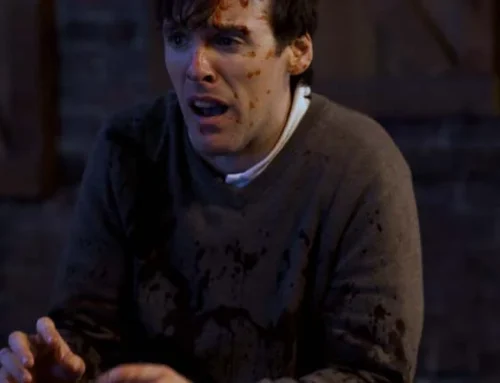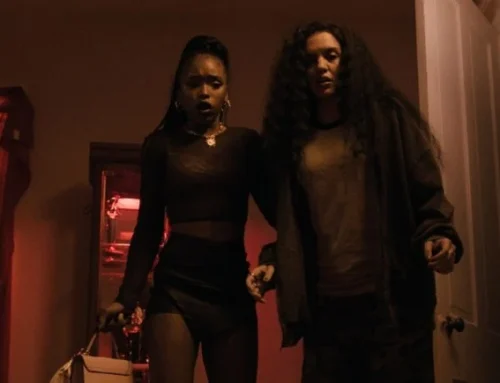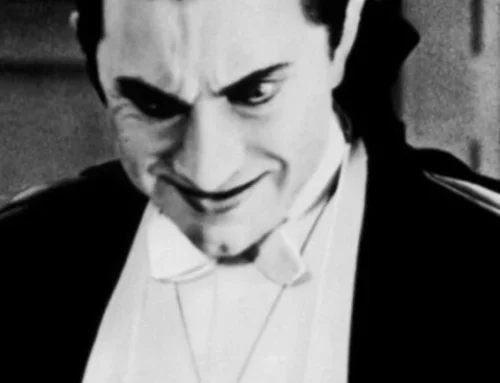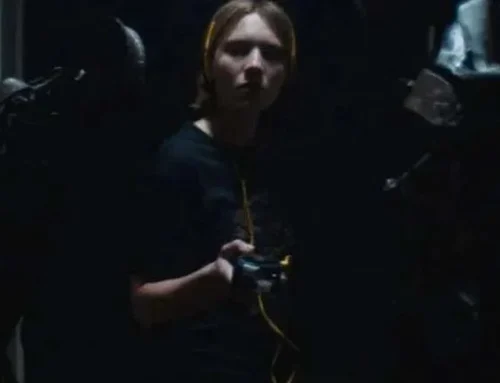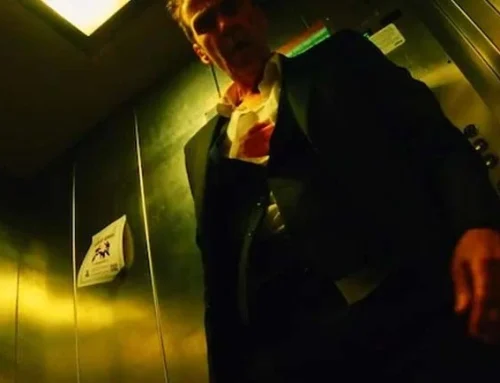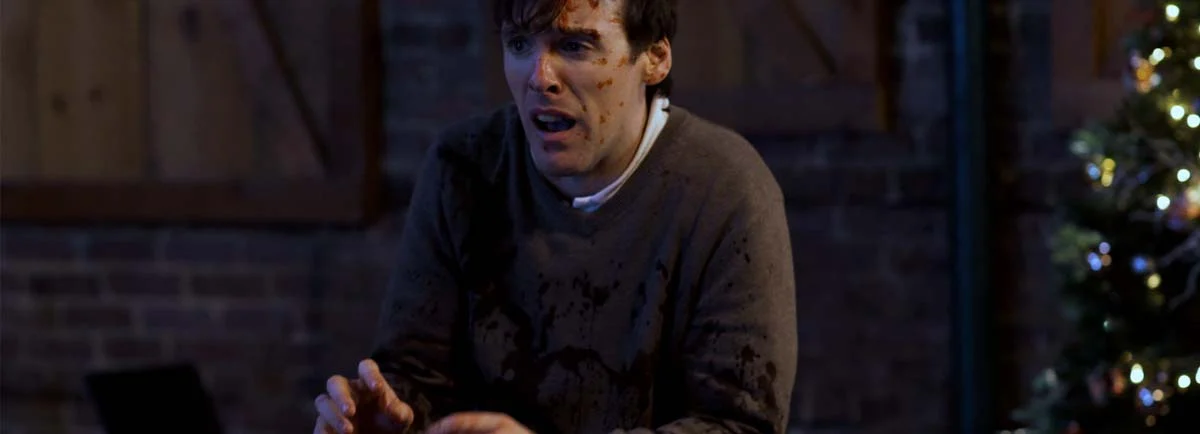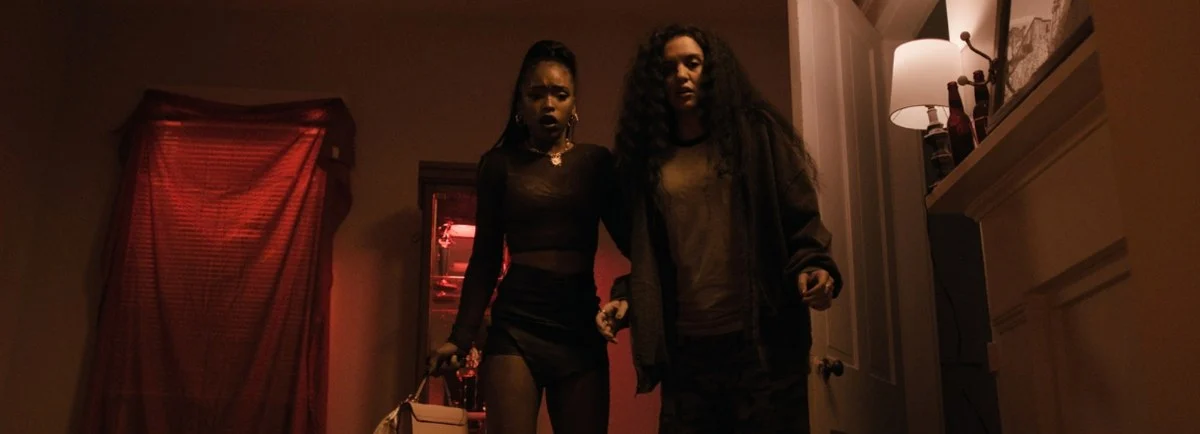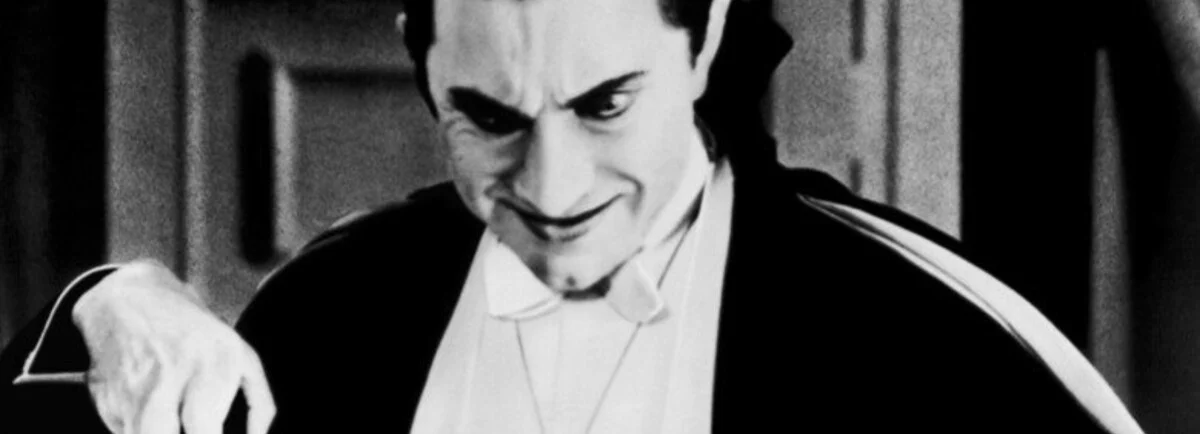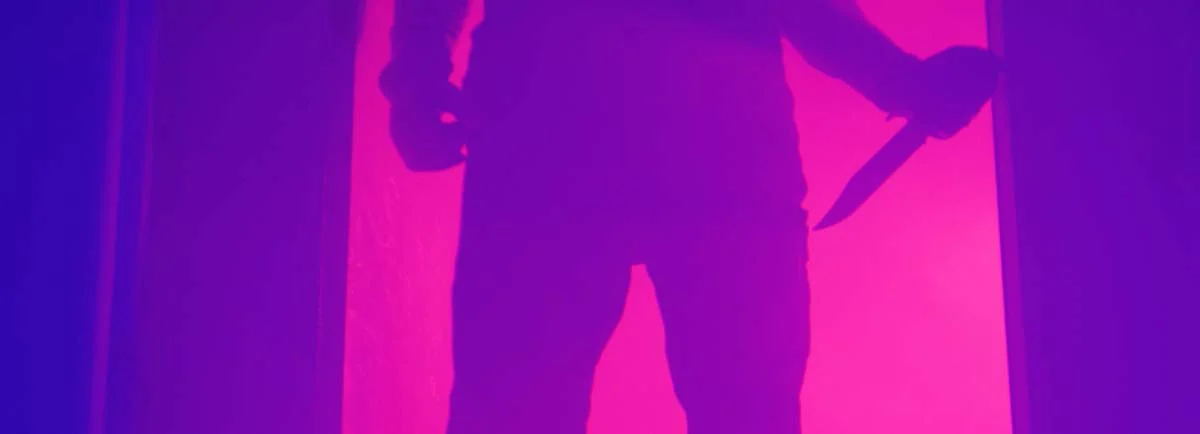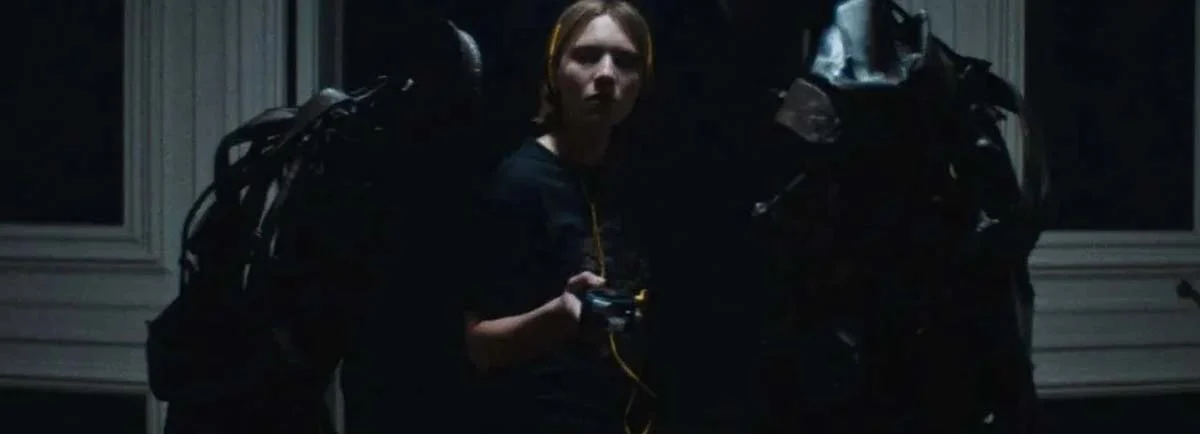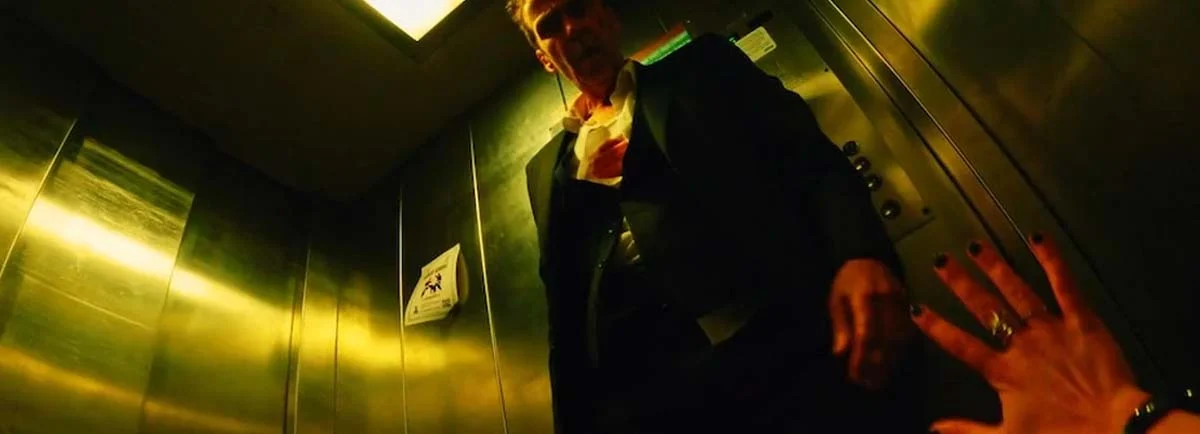
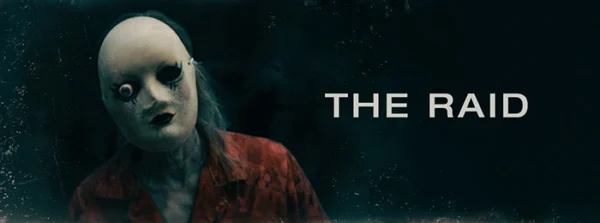
Legendary Uruguayan horror pioneer Ricardo Islas has recently released his newest film The Raid.
The Raid is an anthology horror film that follows a group of ICE agents during a routine operation that leads them into horrors beyond their darkest nightmares.
As a teenager, Islas broke ground in both Uruguayan horror and independent Latin American horror, becoming the Godfather of Uruguayan horror and a part of the new wave of 1980s Latin American horror filmmakers. His innovative short film Posesión paved the way for his early notable films Crowley and Plenilunio. He later relocated to Chicago and continued to make independent horror movies in America and Latin America. Islas’ work has influenced notable Uruguayan filmmakers like Fede Alvarez (Alien: Romulus) and Maximiliano Contenti (The Last Matinee).
As Contenti shared with me about Islas, “Ricardo has always been a true inspiration for me and my work. His audacity to bring to the screen amazing stories of his own from his very humble beginnings in Colonia, Uruguay always surprised me. Working with him was a true pleasure; he brought to our collaboration all his energy and passion from day one, and he made the film feel alive. Also, it helped a lot to shape the film being generous with his work, which you can appreciate inside The Last Matinee movie screen. I’m keen to collaborate with him again in the future”.
Islas shares with us how he started making films, his creative influences, the creative process of The Raid, and what he hopes audiences will take away from this film.
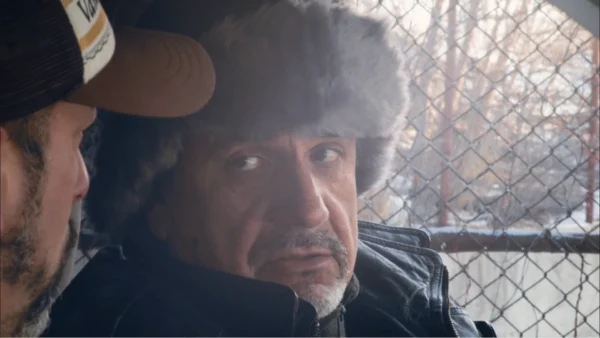
Islas in The Raid
Justina Bonilla: What inspired you to get into filmmaking? You were really young when you started.
Ricardo Islas: Yeah, it was, maybe the frustration to some extent that, and I know it sounds crazy, but it was very difficult for me to publish my writings. So, I wrote a couple of books that never got published. I was close to publishing one of them, but it didn’t work out. This was earlier. This was the first book. It was early 1980s [and] I was like twelve, and nothing happened. So, I figured in a very naive way that if I could write a script which was shorter and easier than a novel, and if I could go to a local TV station, maybe I could get it made as a movie. And I know it’s kind of backwards, because it’s easier to write than to make a movie, but in my mind, it was the opposite.
So, I was about twelve years old when I remember I had seen The White Buffalo [with] Charles Bronson, and there’s this scene that impacted me a lot. I think it’s part of a dream that his character with Hickok, I think it’s the name of the character, he sees a mountain of snow and all of a sudden, the mountain blows up and the buffalo comes through. Now you watch the movie, and it didn’t hold very well, because you can see the tracks under the buffalo. But at the time it really impressed me. It was in color, you know, and I had black and white TV, of course. To see that in color in the theater.
I had a crazy vision of a similar scene where there’s a mountain of snow, a little boat, and it blows up. And it’s like a big whale that jumps on the boat. I thought that there were no words that it could type or to describe that, that it should be imagery. And that also had to do with my decision to start pushing for this, which originally at thirteen years old I wrote the first script. I went to the TV station, and nothing happened. I was too young. And then three years later, when I was sixteen, the first movie happened. And funny enough, on the twenty sixth of March, it was forty years since the airing of the first movie, Posesión.
JB: Wow! So, you were sixteen when you did that?
RI: Yep.
JB: From my research, it’s considered the first Uruguayan horror movie. So, what inspired you to make your first movie a horror film?
RI: Yeah, it’s a two-part answer. To be honest and to be fair to predecessors, there’s a very interesting silent horror movie made in Uruguay in the early part of the twentieth century called El Pequeño Héroe del Arroyo de Oro, The Child on the Golden Pond, or Golden Lagoon, based on real-life happenings, where an old man lost his mind and killed his family. It’s a terrifying story. I never saw the movie and I would like to remake it one day. I mean, the nature of the story is horrifying.
And then the second part of your question was why I make horror, right?
JB: Right.
RI: Well, that’s because I like to make what I like to watch. And that’s what I always like to watch, since I was a kid. And it’s due in part from my father [who] used to tell me the stories about the Universal Monsters that he watched when he was a kid. And I couldn’t watch them because of a generational thing. Back then those black and white movies were not shown on TV. They started showing them again later, so I never saw them. But that fed my imagination, and I used to draw those monsters as I imagined them. That’s had a lot to do with me choosing to make what I like to watch.
JB: Were horror movies available when you were younger?
RI: The horror movies that I grew up watching were the Hammer horror movies. They had a huge influence and impact on me. One of the first ones that I saw was definitely Christopher Lee‘s Horror of Dracula, but I think vague memories I have of having also seen the Plague of the Zombies, probably, but I didn’t know what it was until later. And a movie that is not Hammer, but it has all the style, Black Sunday with Barbara Steele. That impressed me for life. So, those are the movies I grew up watching.
JB: What was the reaction to your first movie Posesión?
RI: It was very interesting, everybody, because it was a small town, and it was the local TV station, so of course they watched it. They watched it probably to get a laugh, just as a novelty. The next day, I mean, I didn’t have a telephone [and] there was no social media or internet, but they would just stop me in the streets to ask me about the movie, to congratulate me. Things like that.
So, it really, I would say that reaction is what confirmed and pushed me to keep going. If they had just had the laughter, they would had made me know that it was funny, and [that] they were making fun of me, I probably would have never made the second one. But that’s not what happened. People were surprised.
JB: And then in 1987 you made Crowley. You were seventeen when you did that. So, what made you want to go from a short film to a feature film?
RI: That’s what I wanted. I mean, the only reason I made a short film first is not because I tried to make a feature and I couldn’t write more. It’s because I knew it was impossible to engage the TV station to make anything shorter than twenty something or thirty minutes. So, it was [a] deliberate decision. Because of the of the people’s reaction, which impacted also compliments to the TV station for daring to do something so incredibly different, not only at a local level but at a national level at that point. So, I used all of that to jump into what I really wanted to do, which is to make a feature length. It was completely intuitive. But it was, like eighty some minutes, so we made it to a feature.
JB: And then you eventually went to Chicago. What was it that led you to Chicago?
RI: It was a film festival, after ten years, exactly ten years of making movies in Colonia. Uruguay in general, but mostly in Colonia. I made a movie first for a TV station in Montevideo with more money, called La Trampa, The Trap. That movie got into the Chicago Latino Film Festival, but the co-director of the movie never told me about, so I found out within the newspaper that the movie and him were here [in Chicago].
I was really shocked, and I was also sad, because I wanted to be here, so I called while the festival was running in Chicago. I looked [up] the number, and I called the festival, and I talked to the director of the festival, and I told him what was going on, giving a very hard time to the other guy. He said to me, “If you ever have another movie, send it to us”.
And next year, that was 1995, I had another movie called Mala sangre, Bad Blood, and I sent it. And they sent me everything, the tickets, the invitation, and they brought me here. I was here like ten days I think at the festival. And that’s why Chicago, that’s why I ended up here. I came here and met some people, people from my country. One of them was the owner of a newspaper who passed away now. And a newspaper was the first one of that size in Spanish here in the United States, not just Chicago. He invited me to come here. He said, “Why don’t you come? And you know, we try to make something together”. We didn’t make anything together, but because of that invitation, I ended up here.
JB: What inspired the idea for The Raid?
RI: It’s not what people may think by watching The Raid, which is, he made a movie about that’s going on now in the news, because The Raid has to do with an immigration raid. No, I wouldn’t be honest if I said that. The truth is that I wrote ten half hours about three years ago, maybe two and a half.
There’s a producer here in Chicago, his name is Chris Adams, who made anthology movie years ago, sci-fi. And I thought it was interesting. It was short stories. And then he invited me when he was going to make another one of those anthology movies. He invited me, and he said, “Do you have anything short?” And I haven’t written anything short since 1985, so I don’t have anything, and I don’t know that I can even do that. So I took the challenge, and I wrote one first half hour. It’s not in this movie that you saw, it hasn’t been produced yet, and I really got a liking to do that.
I saw that and I watched a lot of shorts first. I watched the Trilogy of Terror with Karen Black, one of my favorite ones. I watched another one, also by [Dan Curtis], called the Dead of Night, and the way that he approaches the short stories. I think it’s something similar to what I did, where you get to know the characters in the first few minutes, and then you jump right into a third act. You skip the second act. There is no real development of the story, usually just get to the final action. That’s true especially to the third story in the Trilogy of Terror, the one with the little warrior, the little doll that chases her all around department. And then a much darker one called Bobby, which is the third story in the Dead of Night. Both of them start with a usually a character that is isolated somewhere, a woman, usually, and you get to know the drama right away. What’s going on, and then you jump right into action and suspense.
So, taking that formula, I wrote ten half hours, because I really like it, the formula. And I picked three. And I said to myself, “Maybe I can create an anthology movie in the style of Asylum from Amicus [Productions] and all those movies that Amicus was producing with Vincent Price? Some of them Peter Cushing in the 1970s.”
So when I was thinking, what can I do to weave, you know, all these three stories, and then thinking, okay, I’m Latino, these are Latino stories, all of them are usually have Latino characters, and we didn’t even have Donald Trump as the president back then. So, it was not this moment in history, it was before this, but it was coming. It was clearly coming. And I said to myself, “Okay. Well, I think ICE is going to be in everybody’s mind by the time that I get to finish this movie, so let me try to write something in that vein.”
And that’s what I did. I created this story about an immigration raid that goes into a building. My original idea for the script, they find different objects, and these objects tell a story. But then that kind of evolved in production and also during the writing stages. And instead of objects, even when the first story has to do with a necklace, the other stories are mostly about the characters, but that’s how you go into those three stories.
JB: When you were picking the stories, how did you decide on the order of stories?
RI: That’s an interesting question. I don’t remember why I made that decision, you know. I think that it was probably based on a progression, because one thing that Don Curtis would do is he would start with a movie that is more like suspense mystery and ended up in horror, pure horror. These three stories are horror, however, the first one, even the cannibalistic stuff is more, like it’s more story driven. It’s the character of the judge, and what she did, you know. The other one is definitely suspense, the one with the with the two women on the beach, shot in South America and Uruguay. That’s a suspense all the way, even when it has a supernatural element.
And then the final one, I knew I wanted the possession, the child, and the finale, which, as you know, is really pushing the envelope. It pushes other stuff too, so that I wanted to have that progression, you know, going from mild to wilder and completely wild at the end. I’m not sure that I achieved that, because the first one is pretty wide too. The second one is definitely more suspenseful than horrifying, and then the third one is the one that goes full force.
JB: You had mentioned filming in both Uruguay and the US for The Raid. How did you make the decision?
RI: In the beginning, everything was going to be done here, and all the stories were written in English. Why I picked Uruguay is because I knew from the get-go that I needed actors, in this case two actresses that can go really deep, you know. It’s difficult because of what I told you before. When you have a story that doesn’t have a second act, and you just introduce the characters, and then you go into full action, you need actors who can, you know, dive into the substance of a story right away. And I thought it was going to be difficult here to find those actors, and I knew in Uruguay some actors who could pull it off. So acting was one factor. And of course I translated into Spanish.
There were a lot of reasons where it almost didn’t get made. But then the owner of that restaurant on the shore on the beach [in Uruguay], I didn’t know him, but I saw that he was always putting likes in all my postings. So, I went out on a limb, and I wrote to him and I said, “Hi, this is me.” And he said, “Yeah, I know who you are.” And then he said, “You can come. We can shoot here. I’m not going to charge anything. I might even feed you.” And that closed the deal. So that’s why I ended up doing that movie over there, you know. And it was a mix of the actors and the location.
And something that was extraordinary for me, which is all those actors that you see in that movie, not all of them, but most of them are the actors who work with me in the 1980s. So, [in the Cover Up story], [Beatriz Rossi Rodriguez], the Mrs. Rossi character, the lady in the red pajamas she’s the possessed woman in Posesión in 1985. And then the nun, who has a short scene, she’s also in [Posesión], and she’s also the main victim in Crowley, my second movie. And then Ana Cecilia García, the actress who plays what would be the bad girl out of the two, the duo, she is the girl from Plenilunio. And then Eva Dans, who plays the main role, she’s a famous actress and producer in my country. I knew her husband, because her husband was the writer for Maxi Contenti, which you and I met because of that movie [The Last Matinee]. I knew that she liked my movies, so she said yes right away, and that’s how it happened. So, there was a bunch of things, beautiful moments to work with someone, with people I hadn’t worked with in over thirty years.
And then the other one that is in Spanish, which is the possession one, the last one is because the main actress and the producer is a Colombian actress, and she wanted to produce one of the stories, so in order to do this with her, I decided to do that one in Spanish, but originally all ten stories were written in English.
JB: You brought in two other directors for this film. How did you meet them?
RI: Mary Queen Angel, she was my assistant director during the production of Night Hunt, which is the third installment of [the] Crowley [series], shot here in Chicago. That’s how I met her and I loved working with her. I knew that one day I would like to give it a try and see how she would do directing. I saw that she was directing other projects, so I thought she was completely ready to go.
And Eashan Patel, he was part of the team of Nahual. While we were working together, I could see that he had an eye, a very good eye. And then I helped them, because many of the crew members of Nahual formed a production company, which you can see in the beginning of the movie, Ready Productions. They met on my movie, but they created a company on the side. So, I’ve been hiring them for all these productions now. I work with them in their own projects as a collaboration, and I had a chance to see how Eashan directs. I love the way he conducts with actors. I think he has a very calm demeanor to communicate ideas, which is essential here.
And I wanted to also give this a chance. For me it was something that I always wanted to do, which is to have other people direct something I write. It was the first time, and I really enjoyed sitting back. In Eashan’s case, I really sat down. In The Raid, all the, how do you say, the wrap around story that Mary Q directed, I was more involved because I was doing photography. But still anything that has to do with actors, including rehearsals, I let go [to] her, and she did a great job. They have completely different styles, you know, but I think in both cases it paid off very nicely.
JB: Out of the film segments that you did, what was your favorite scene to film?
RI: I think it was in Uruguay, the discussion between the two women on the deck of the of the restaurant. It was such a strong performance, and both of them did so great that I really, really loved that with that scene. I love to see when I watch it, but I also love making it.
JB: What was the most challenging scene to film?
RI: Well, I think that the scene with the priest was a handful. Although it was challenging, not so much for the reasons you may think, but because it was done in little pieces. It looks like everything happens in one place, but it doesn’t. So, we shot most of the action, including a stunt in a home and then we shot all the details and the really rough parts in my garage.
But another one that was very challenging is my favorite one, and the reasons are pretty crazy. The reason is that for the first time in my life I was chased by the tide, that scene that we shot on that deck over the river, that’s the river Rio de la Plata. It’s the widest river in the world. The tide races very fast. So, we had a stormy day and the scene was supposed to be shot.
You have the deck when you have sand on the way. All that scene was supposed to be shot from the beach, sand on the left, shooting up at the girls standing on that deck. That got flooded right away. And then the other side start getting flooded, and we ended up shooting the scene with the tide going on our ankles, and it was just going up and up and up, but we had to really run to do it. That was very challenging for us, for all of us, but we got it to work. That’s why I had to use AI in one of those shots. There’s a shot of the car leaving the premises. We couldn’t do that, because from where we were, we were underwater.
JB: One of my favorite scenes was the one with the little boy levitating. I thought that was so creepy.
RI: Yeah, those, those challenging to shoot, and I have to compliment Christina De Leon, the actress, because, as you can imagine, in these scenes she wasn’t looking at anything. She gave a very nuanced performance [with] tears rolling down her eyes and her cheeks, you know, as she’s talking to nothing. I think we used a boom so that she had something to look at, and then we moved the boom down, so she could [have] something to look down on when he’s levitating down. The scene you are talking about. But it was just her imagination and very challenging circumstances. She pulled it off beautiful, right, and then I noticed that you were also.
JB: In this film you play an officer. What’s it like to act in your movies?
RI: I’m not going to say anything new here. It’s challenging, even if you have a big crew, a big professional crew. I haven’t been in that situation, [but] I’ve heard this challenging too. But that’s many times more true when you have a small crew and a low budget. That’s why I ended up taking always small roles. I like that.
When I was younger, that was crazier. I would just take starring roles in my movies, you know, and I had to keep an eye on the camera and everything. I mean, we went so far, as in a movie called Into the Darkness in the 1990s, where I didn’t have a camera person. So, I would just have the actor here and would just go press record and I stood up in front of the camera for a particular scene.
That’s why I took this small role in this movie. Originally, I had thought of playing the main ICE agent. Very fortunately, I had Jose Santiago, who’s very good, and I worked with him before in other directors’ movies [with] me being a DP. And I always knew I wanted to work with him, and we did. And then, when the other actresses, Monica Ochoa, who works in most of my movies, and it’s always a pleasure working with her, she’s a trooper. She always gives me those violent death scenes, you know, with all the screaming and everything that she puts off as in Nahual. She did great too.
JB: What do you hope audiences will take away from your film, or your films in general?
RI: You know, I’m known for making these movies that have a social comment, and they do. When I was in South America, I was just learning, so I was just remaking Hammer on my own level. But here, since I came here, pretty much since the very moment I landed in this country, I’ve been having social commentary. I think it’s because migrating is such a strong experience for anyone. It changes you. I am not a part of the machinery of Hollywood. I’m just an independent guy. So, anything that somehow impacts me, impacts my moments.
So, what I want from the audience is to be entertained, but also, I think it has different layers. The scripts have different layers, and I don’t expect everyone to perceive the same layers or to enjoy the same layers. But I will hope or dream that some people will just be entertained, while others might think a little more. I’m an entertainer, but I also like to introduce these layers, and I think they’re there. And I hope that people see them.