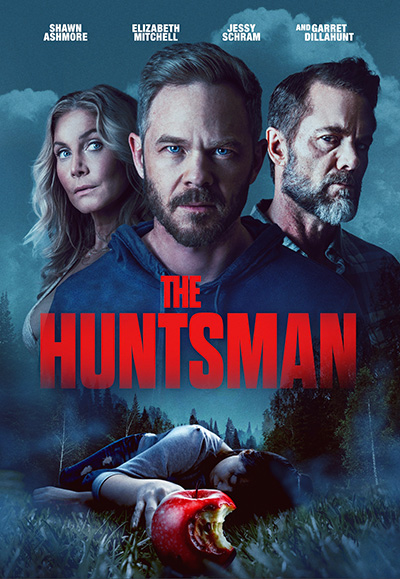
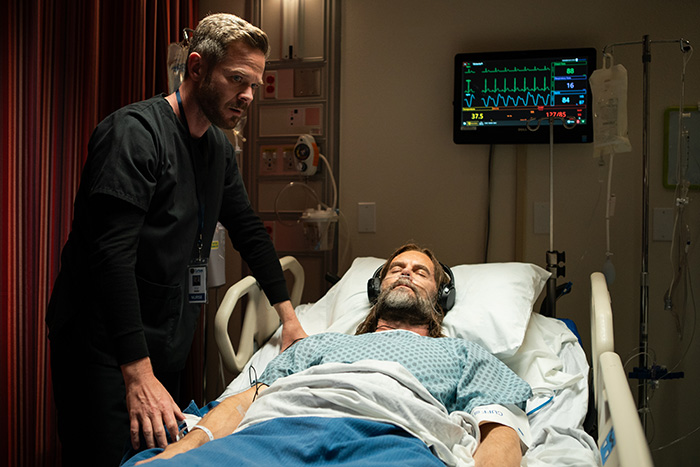
Actor Shawn Ashmore has built a career out of navigating genre terrain with titles such as X-Men, The Following and The Ruins, but The Huntsman finds the actor operating in a far quieter, more unsettling register than audiences might expect. Leaning heavily into psychological horror, the film trades overt scares for creeping dread, following a man slowly unraveling. The official synopsis for The Huntsman reads: When an ICU nurse volunteers to help a coma patient accused of murdering six women, he’s drawn into a chilling web of lies, obsession, and deadly secrets as a detective races to stop the killer. We spoke with Ashmore about everything from embracing silence and stillness as a form of terror to how The Huntsman uses emotional desperation to burrow under the skin long after the credits roll. The Huntsman is now available on VOD.

The Huntsman leans more into psychological horror than traditional scares. What kind of fear were you most interested in exploring with this character?
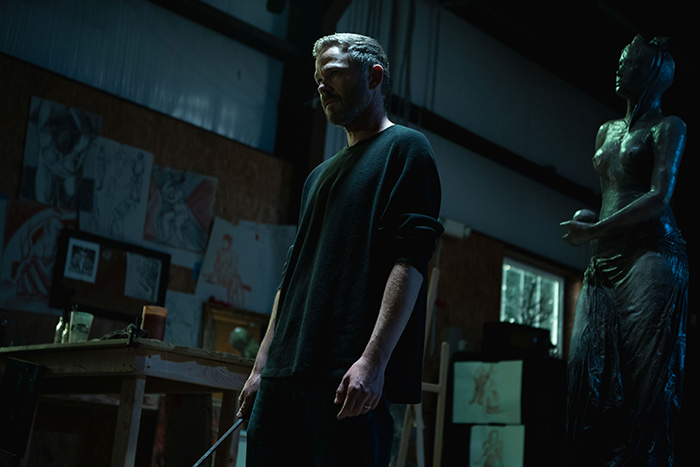
With Max, I think the main fear is his helplessness—this feeling that he’s not in control. He’s a desperate guy, but he can’t really show it. He has to keep it under wraps because he’s on a mission. He’s lost, trying to get a grip on what’s happening to him, and that’s pretty scary when you really sit with it.
I approached Max by asking myself how I’d actually feel if I were in his position. What’s frightening about it is that it’s not loud, it’s not someone screaming in terror. It’s this quiet, constant fear—you’re panicking inside, but you can’t say anything or just let it all out. That silent kind of struggle can really wear you down. That’s what made the role interesting to me.
Did you look to any other horror or thriller performances for inspiration while working on The Huntsman?
Um, not specifically. Kyle, the director, and I mostly talked about the silence of this character and how much he’s observing. He’s almost passive because he’s kind of run out of leads, you know? He’s hit a wall trying to solve this mystery, so he ends up in this place where he’s more of an observer than an active participant. He’s passive, he’s quiet, he’s just… still.
We talked a lot about that: his stillness, his inability to really communicate, and the idea that he’s always watching instead of speaking. So rather than looking at other people’s performances, it was more about those qualities. We kept asking, how do we make that interesting? In a story where things need to keep moving, it’s a real challenge when your character doesn’t say much. How do you keep that engaging? How do you keep the audience with you? That became the big puzzle.
We also leaned into the ambiguity of the character. Is Max good? Is he bad? What’s he really trying to do? What’s his actual goal? All of that was something we wanted to keep alive so the audience would either root for him or at least stay with him, trying to figure out what he wants and what he’s really trying to achieve. That’s a tough balance.
Was there a scene that genuinely unsettled you while filming?
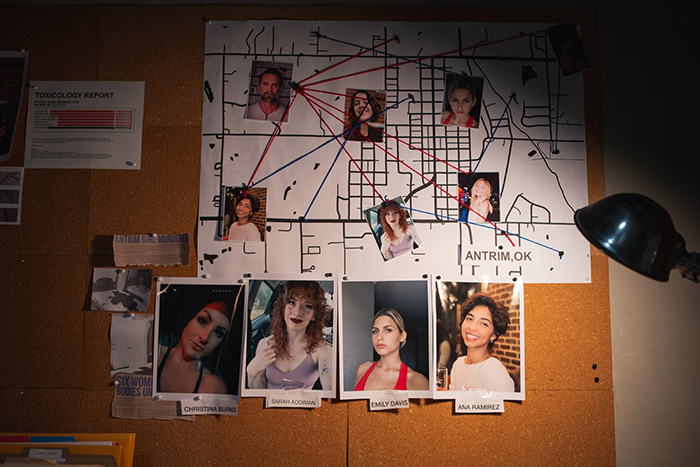
I think seeing Jolene’s art studio for the first time really got to me. I don’t want to spoil too much, but that was pretty unsettling. The team that designed and dressed that set did such a detailed job. I already knew where the story was going, so walking into that space for the first time—especially since we shot it at the very end of the film—was instantly eerie. Just moving through it and taking in all the little details was really creepy. There’s another scene that definitely rattled me too, but that studio, that’s the one that really stuck with me.
Many horror films reflect deeper anxieties beneath the surface. What themes do you think The Huntsman is really tapping into?
When I approach something, I usually come at it from the character first. For me, the big theme was loss of control. You’ve got this man who’s very capable, very loving, and he’s thrown into a situation where he has absolutely no control. That’s what really hit me—the horror of being completely lost in a situation.
No one believes you, no one can help you, and at some point you realize you’ve got to do it alone. Your family can’t help, the police can’t help, the people around you don’t believe you. You’re just this man lost at sea, trying to find… well, I don’t want to spoil too much, so you can decide how much of this you want to use. But by the end, Max has lost the only thing that truly matters to him—his family. No one knows how to fix that. He’s tried the police, the legal system, all the usual avenues, and everyone is stuck. His own sister is a detective and even she can’t help.
So he takes matters into his own hands and becomes a kind of vigilante. But even then, he’s not sure if what he’s doing is right. He’s basically throwing his life away on this last-ditch effort to find his wife and child, and he doesn’t know if it’s actually the right move. He’s just completely adrift.
That sense of desperation and hopelessness—that’s the core theme The Huntsman really digs into for me. How do you pull yourself out of the deepest hole? And sometimes you think you’re climbing out, but you’re really just digging yourself in deeper. Exploring that was really interesting.
You’re no stranger to genre work, from sci-fi to thrillers. What does horror specifically allow you to explore as an actor that other genres don’t?
I come to this kind of material first as a fan of genre filmmaking and storytelling. I love that you can take a pretty ordinary story and give it these extraordinary stakes.
Thrillers and horror films are worlds you’d never want to actually live through in real life, but you get to experience the full intensity of those emotions in a safe way—at the theater or at home. As an actor, it’s the same thing: you get to push the limits of emotion and fear, and do it in a controlled environment. That’s fun. It’s interesting. I would never, ever want to actually go through half the things my characters have gone through, but there’s something fascinating about going right up to that edge of pain, fear, desperation.
I don’t fully know why we enjoy that, as audiences or as performers, but we do. Like I said, it’s a bit like a roller coaster. You don’t really want to drop fifteen stories in real life, but on a ride, where you know you’re safe, you want that adrenaline, you want to be pushed to the edge and feel your stomach drop.
Genre storytelling does that. And on top of that, you can take a subject that might be too hard or too uncomfortable for people to face directly, and wrap it in the language of horror or thriller. It makes it easier to look at, because it’s disguised a bit. But underneath, there’s still a core story or emotion that people end up having to confront. I think that’s one of the powerful things about genre too.
Last year you appeared in It Feeds alongside Ashley Greene. What was the biggest surprise for you during that production?
The biggest surprise? I’m not sure there was one big shock. Ashley and I had worked together before, so when the chance came up to team up again, I was genuinely excited. And getting to shoot in Canada with Chad Archibald and Black Fawn Films was great. I really loved the script, and I got to lean more into being the villain, which was a lot of fun.
I wouldn’t say I was surprised by the quality of the script—we knew it was strong—but thinking about it, the thing that probably impressed me most was the level of the practical effects and makeup. These days, there’s usually some solid makeup on set, but you know a lot can be boosted in post. On It Feeds, the creature effects on the day were incredible. Seeing that, in person, was really cool.
Then when we had a screening in Toronto and I watched it with an audience, people were literally covering their eyes and screaming and squirming in their seats. I already knew exactly when the jump scares were coming and it still scared me. I wouldn’t say that was totally unexpected—I knew it was going to be scary—but it ended up being even scarier than I thought. That was a really fun payoff.
What keeps pulling you back to the horror genre?
I’m drawn to intense characters and intense stories. That’s interesting to me. You get to push things pretty far in terms of performance—take ordinary people, throw them into extreme situations, and see how they react. As an actor, that’s a great exercise. You get to go big, tap into huge feelings and huge circumstances, and really stretch yourself. It’s just a very satisfying kind of work.
When you’re acting in a horror or thriller project, do you find it easier or more challenging than a drama, like The Rookie?
It’s just a different kind of challenge. In a thriller or horror film, the purpose of a scene is usually very clear—things are big, the stakes are obvious, and there are choices you have to make so that your performance makes sense within that heightened world. That doesn’t mean it’s easy. It can actually be hard to do that well and keep it believable.
Fear in particular is a tough emotion. Genuine fear is hard to portray on screen. I don’t think it’s my strongest suit, so I’m always trying to figure out how to play it in a way that feels real, because it’s such a physical, visceral feeling.
On The Rookie, for example, the stakes in a given scene might not be as high. It might just be my character, Wesley, and his wife, Angela, arguing about everyday stuff. That’s not as hard to access emotionally because it’s more familiar—you argue about daily life all the time. But there, the challenge is making something ordinary still feel interesting, or funny, or moving.
So it’s a different kind of work, but at the end of the day the goal is the same: you want the character to feel real and relatable, whether they’re in a life-or-death situation or just having a kitchen-table argument. You want people to care about this person and stay engaged with the story. The stakes shift from project to project, but you’re always chasing that same connection with the audience. If you’re not doing that, you’re not really doing your job.
Do you have a favorite horror film?
I’ve got a few. Rosemary’s Baby is one of my favorites. The Exorcist is up there. The Shining too. So, yeah, the classics. Those are the ones that have really stayed with me over the years.
Rosemary’s Baby in particular is one I go back to. There’s just something about that movie and those performances. It’s incredibly unnerving. The acting is subtle but also big at the same time. Some of it is almost comical, kind of larger than life, but within the world of that film it feels creepy and grounded and really disturbing. It’s just a really cool, genuinely scary film.
How does indie horror actually get made? Jordan von Netzer asks the people who make it, from actors and directors to composers and production designers.