
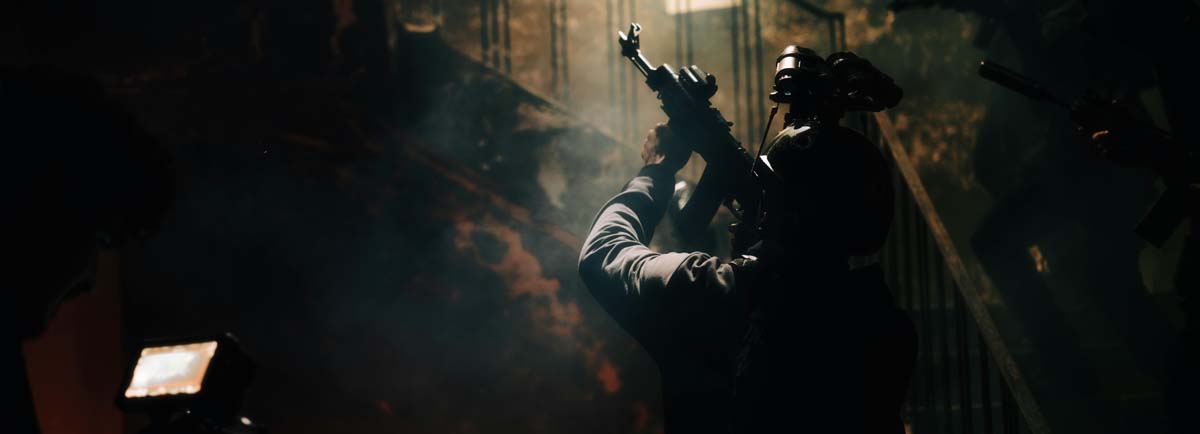
When it comes to Call of Dusty, Search and Destroy doesn’t overwhelm you with noise. It starves you of certainty, then makes you live with the consequence. No reset if you lose a gunfight. Just two teams moving through a map that goes quiet at the exact moment your brain wants certainty. The dread comes from scarcity: scarce lives, scarce time, scarce information. Once you see those limits shaping every choice, S&D stops feeling like chaos and starts feeling like a suspense scene you can replay.
The Cold Open You Don’t Get to Rewind
Before the first shot is fired, S&D is an information game. Both sides are trying to learn about their opponents without revealing information about themselves. It’s a hard balance to maintain. Peek out into an open area, and you might reveal your route. Stay hidden, and you might miss the timing window that protects your teammate. In respawn modes, a bad read costs tempo. In S&D, a bad read can end the round. One early death doesn’t just turn the game into a 4v5 match; it shrinks the map into fewer safe angles, fewer trade paths, and a shorter clock.
Odds can help you set a baseline story before you watch, not because they predict the future, but because they summarize expectations. You can use sites that offer Call of Duty betting odds as a quick context check: if one side is favored, the match is expected to follow their preferred pace, which often means cleaner openings and fewer panic retakes.
If the odds look close, watch for swing rounds where a single first pick flips the plan. Many match pages also break expectations into smaller parts. A match-winner line frames the overall favorite. A map-winner line hints at where the series may tilt. A correct-score line signals whether people expect a grind or a clear finish. First-blood style markets point you toward opening routes and who tends to claim early space. And if live lines are available, they often react hardest to a clean plant, a fast defuse, or a round-ending trade. To practice, open Call of Duty betting odds before you watch and note which moments actually rewrite the round’s “script” in real time.
Watching some of the top gamers testing their skills against each other in the World Championship can be a great way to get better at spotting the moments that can decide a match one way or the other, and can help you improve your own skills as well.
https://www.instagram.com/p/DSIF9vzjV6J/
The Moment the Map Cuts In and Options Vanish
Great S&D rounds usually have a moment where the map “shrinks.” It happens early. One player gets picked near a power lane, or one team wins first contact and claims space. Suddenly, half the routes become too dangerous to touch. The team down a body has two costly options: slow down, group up, and trade space back with numbers, or hit the opposite side fast and force a plant before defenders reset. Slow play invites a pinch and burns the clock. Fast play risks running into a stacked site and dying before the plant is down.
If you want an easy tell, watch the second player behind the entry. When the “second man” is late, the entry is exposed, and the round becomes fragile. When the second man stays shoulder-close, the team is buying safety by sacrificing speed. You can also watch the bomb carrier: if they are already moving with the hit, the team has committed; if they are lingering, the push is still a probe.
Sound Design for a Round That Wants You to Panic
Audio is important in all video games, but S&D is audio-forward because sound is information. A sprint, a late reload, a door moving, even a sloppy mantle can hand over direction and timing. Silence matters too. When the map goes quiet, teams are often denying information on purpose. They stop taking unnecessary fights because every fight is a clue, and every clue speeds up the retake.
Timing pressure is the cleanest viewing cue. With 60 seconds left, options still exist. With 20 seconds left, every decision counts. Watch how disciplined teams weaponize that pressure: they hold angles that punish desperation, delay to force a rushed plant, and keep spacing tight, so a single mistake becomes a trade, instead of a collapse.
The Final Beat: Where One Read Ends the Scene
A clutch rarely comes from chaos. Most of the time, the winning player is solving a small set of problems in order: clear the closest threat, isolate the next fight, and force the opponent to move. The calm you see is not a lack of nerves. It is a controlled decision tree.
You can use three questions to stay oriented when the round slows down:
- Who has more information right now?
- Who has more time right now?
- Who is being forced to move?
Answer those, and the final seconds become readable. You will see why one mistake matters, why the silence feels heavy, and why S&D makes every door feel like the one you have to open.
