This year, The Screaming Room Film Festival is bringing another year of screams, chills, and bloody thrills to all three days of Midsummer Scream.
The biggest privilege of this festival is to bring together the unique and original horror of incredible talent on the big screen, to the horror hungry Midsummer Scream guests to enjoy.
To celebrate another amazing year of The Screaming Room Film Festival, we’ve interviewed a few select filmmakers whose films will get your spine-tingling this weekend. Their interviews are categorized by the day they are screening.
For the complete Screaming Room schedule and more information about these and the other films playing, you can create your own account on the festival app here. And for more information about Midsummer Scream, download the Midsummer Scream app HERE.
Day 1: Friday
The Deep Vessel
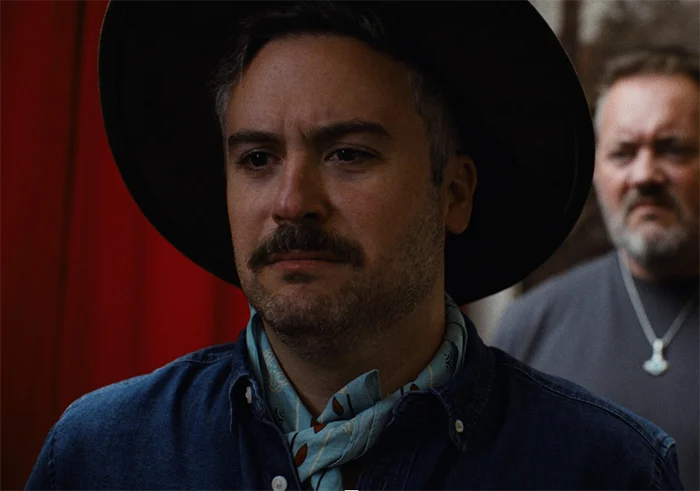
Talent: Tyler Beveridge
Role: Writer/Producer/Actor
Which horror movie got you into horror?
Beveridge: I would have to say The Shining. I know it’s pretty cliche to name that movie, but there is something about it that sticks with me long after I watch it that other movies just can’t seem to accomplish. The color pallet, the music, the performances are all top notch and the sense of dread throughout is unmatched. I became fascinated with horror movies after seeing The Shining as a teenager and it was like a gateway drug into more and more films in the genre.
What inspired you to go into filmmaking?
It was kind of a necessity. In case you haven’t noticed, the film industry as a whole isn’t doing so well, and in the past, I had been fairly successful with just my acting credits commercially and even had a few stints on some TV shows. Things were looking good for the future, but then the pandemic and strikes killed all momentum I had gained.
I’m a fairly impatient person and I wasn’t just going to sit around and wait for the opportunities to come to me. I needed to make those opportunities happen for myself. I began writing and with Sean Cruser‘s help (director of The Deep Vessel). We have been making these genre movies together for six years now. I learned. I enjoyed writing and enjoyed producing, but it was awesome to be able to write characters for myself that otherwise I would never be able to play had I just waited for the opportunities to present themselves. You also learn a bunch about the acting craft by wearing these other hats multiple times. I believe this “exercise in necessity” has made me a better actor overall.
How did you come up with the story for The Deep Vessel?
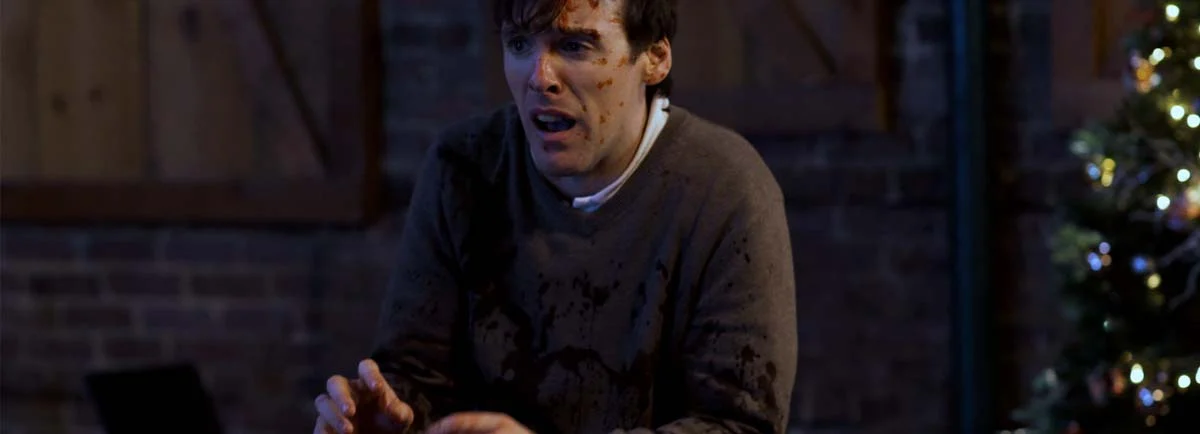
I began thinking about possession films and how I could spin that in a different way than the typical demon scenario. I had been playing a ton…I mean a TON of God of War and I thought it would be cool to fuse the real Norse Mythology that was quite brutal (not just in the game) with a possession horror film.
Brage is truly the Norse god of music. Much of the things he says in the film is pulled from actual mythology. I wanted to imbue as much of the myth as I could in the nineteen-minute run time.
Another trope of demon possession films is the incorporation of Metal music, and I thought it would be funny and different to have a bluegrass folk band be the group we follow instead, the antithesis to metal music. Add in a struggle to be relevant in the modern world of Spotify and Apple Music as musicians you get The Deep Vessel!
Your film visually looks like Wes Anderson meets Evil Dead. Were these influences? If not, what was?
I’m so glad you got that vibe from the film! What amazing comparisons! Evil Dead 2 was actually a massive influence on the film. We wanted to bring that campiness and silliness into our film while still seeming very much grounded in its reality.
Wes Anderson was probably due to the awesome location we had acquired with The Ship Recording Studio located in Glassell Park, California. That place was already decked out with this awesome color pallet and incredible instruments and nautical props. We didn’t really have to do any production design, but it added to the look and feel of the film so much. A couple of other big influences were Ghostbusters, Tales from the Crypt, and The Pick of Destiny.
What do you hope the audience will take away from your film?
Honestly, I just hope they laugh. That was always the goal of this short film. We wanted to make people feel silly and goofy and not have to relive a past trauma or anything (nothing wrong with those types of movies. I love them.).
We wanted to have a compelling story, of course, but if the audience walks out with a smile on their face, we have done our job. We live in such a serious world right now with our own existence on the brink of chaos. Every morning we wake up to some horrible news that just weighs us down day by day. I wanted to make something light and fun so people could escape all that even for a brief time.
This film is silly. You should feel silly watching it. It’s okay to laugh, it’s okay to be silly, even in these dark times. And I hope that is how people walk away feeling as they exit the theater.
The Fall of the House of Usher
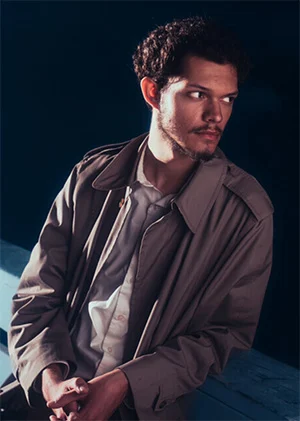
Talent: MK Soares
Role: Writer/Director
Which horror movie got you into horror?
I have always had a lifelong fascination for horror, more so in the supernatural when I was very young. But there was most certainly one film which definitely had an impact on me. It was Alfred Hitchcock’s Psycho. I recall vividly that shortly after developing a deep fascination for filmmaking at the age of five, my father shared his recollections of watching the films of a man named Hitchcock. News to me.
He talked about films of manic birds, one about a man who spies on his neighbors, another about a man who is terrified of heights, and one where a woman is killed in the shower by a young man’s mother. I was entranced, but it wouldn’t be until the age of around nine when I’d finally have the pleasure of seeing The Birds, Rear Window, Vertigo, Strangers on a Train, and especially, Psycho.
They are all perfect, but there was something about Psycho that was so hypnotizing to my then young mind. It’s not a story about supernatural or theatrical monsters. This is a story about people. And how the same people who appear so normal and safe, could also be so damaged and hurt, so much so, that they have the capacity for doing something incredibly wicked. This shook my younger self, it was incredible. And it is still to this day, my all-time favorite film. I love it dearly.
What inspired you to go into filmmaking?
My passion for film began at the age of five. I had a particular interest already in the supernatural, possibly conjured from stories passed on through the family. I was walking through the local library with my parents, looking for any books of my age that may have even the slightest mention of ghosts or monsters in the title. I would find something more spectacular just down the aisle, where in the film and television section, among what little they had, I discovered the original Goosebumps show on DVD. The disc only offered two episodes, “One Day at Horrorland,” as well as “Welcome to Camp Nightmare.”
But I devoured them instantly, and to me, this was revolutionary. Tales of ghosts and monsters but visualized on a screen? Say no more. I would borrow the family’s camera shortly thereafter, producing hideous rip-offs of other Goosebumps material. While as the years progressed, and the subject matter has expanded beyond Goosebumps and into a wider spectrum of horror, the passion for filmmaking has never died, and hopefully will never die. I am twenty-two years of age now and still have the same passion for my craft as I did when I was five. Thanks to Goosebumps really.
Was there a challenge in adapting such an iconic Poe story?
I wouldn’t say that adapting this wonderful story was challenging. I went into production with one rule in mind. I want to craft a very short film that is only five minutes long. The beauty of Edgar Allan Poe’s The Fall of the House of Usher is that it is incredibly open to interpretation and has produced such a variety of unique results.
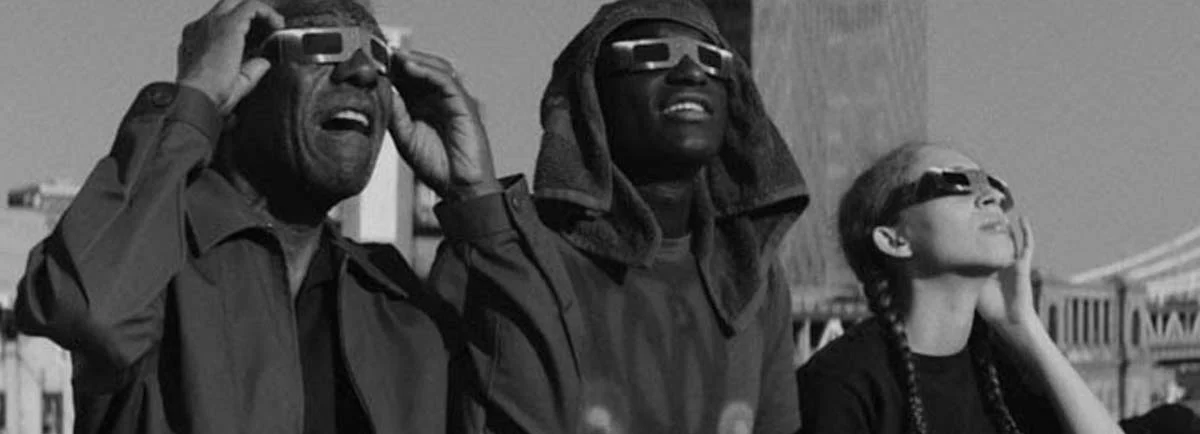
You have Debussy and his incomplete opera, you have Jan Svankmajer’s animated adaptation, there’s the 1928 American silent film version and the French adaptation by Jean Epstein and Luis Buñuel from the same year. So many artists have found ways to transform this single story into their own creative means with such differing techniques. I thought it would be exciting to try it with what little resources myself and my exceptional team had.
The black and white visuals of your film reminded me of the 1930s Universal monster movies. What that an influence in the style of your movie?
I absolutely adore the original Universal Monster movies! Their cinematography certainly had influence across our film. They were frequently referenced as inspiration for the potential of shadows, contrast, and the heavy utilization of candles. Not only that but also the atmosphere elegantly captured among the horror films of James Whale, the pillar of Universal Monster fame! From Frankenstein to even The Old Dark House (which is a film I frequently pulled from).
I am currently in the works of a werewolf western which takes much of its inspiration lovingly, I have to admit, from 1941’s The Wolf Man. But visual wise, the cinematographer, Oz Riveros, and I were also very much motivated by Gregg Toland’s dark, grainy work from The Grapes of Wrath, and the kinetic work of Guy Maddin.
What do you hope audiences will take away from your film?
It is interesting. There is a pattern I’ve noticed across previous screenings. Audience members have come up to me and asked, “Is there more?” This alone is such an honor. You mean to tell me this film excited you to such an extent with its ambiance, scares, visuals, and energy that you simply don’t want it to end?
That’s exactly what I want audiences to take away from our film. I want audiences to be so enthralled by this imaginative landscape of horror we built, that they want to relish more in the story, the suspense, supernatural, and the scares. My team and I would love to give it to them.
Happy Birthday
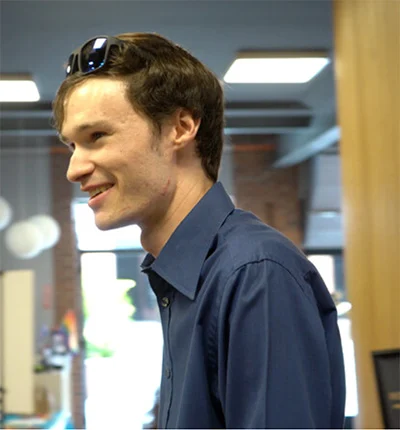
Talent: Jackson Cooperman
Role: Writer/Director/Producer
Which horror movie got you into horror?
Cooperman: Saw (2004) messed me up as a kid, but as I got older, the passion from Wan and Whannell behind the scenes—as these two young guys who just wanted to make a movie—became a major inspiration for me and pushed me to pursue my own dreams as a director.
What inspired you to go into filmmaking?
When I was growing up, movies were like an “escape” from the problems and stress of everyday life. There’s something about horror specifically where you find comfort in the darkness. Horror movies kept me sane growing up, and I wanted to provide that same experience for somebody else in my position one day, so I decided to become a filmmaker.
How did you come up with the story for Happy Birthday?
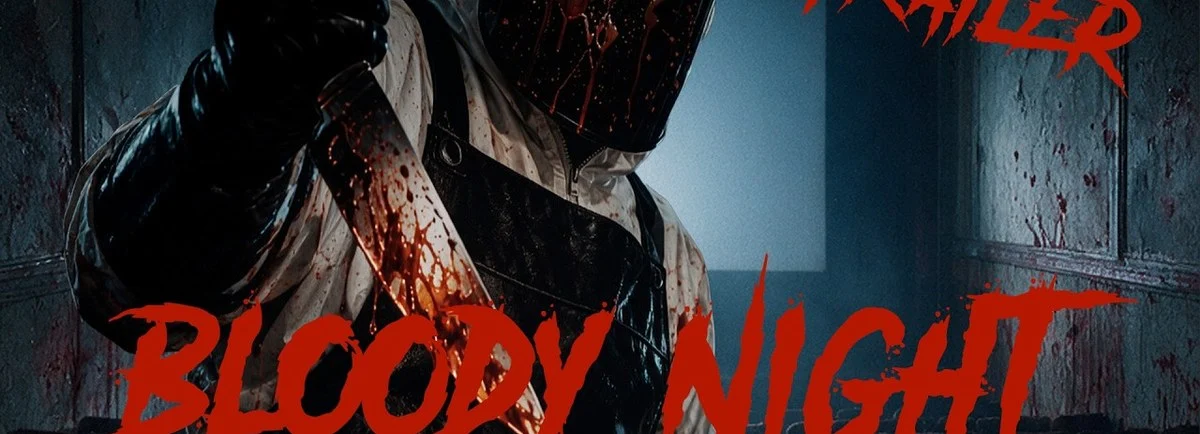
In the 2007 film Grindhouse several directors created a series of fake trailers between the two features, perfectly recapturing the elements that made cheap B-slasher films amazing: poor writing, atrocious acting, inept filmmaking, etc. It’s a unique thing where the worse it is, the better it becomes. I was so inspired that I wanted to create my own fake trailer. As for the story itself, I thought it all up on the spur of the moment as we shot.
How many birthday cupcakes did you go through during filming?
I can’t remember but it was a lot. I think we kept stabbing cupcakes until production told us we were out of money and couldn’t afford to buy anymore. Then we had to wrap.
What do you hope the audience will take away from your film?
I hope people remember that you don’t need a big budget to make an entertaining film. Hollywood tries way too hard these days and it’s only about making money. There’s no passion on the screen. A lot of the cheap horror films of the old days may have been mostly garbage, but they had more passion than any of the “blockbusters” we’re getting today.
Nite Flirt
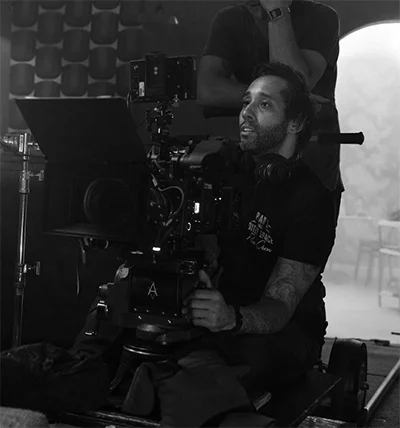
Talent: Samuel Gonzalez Jr.
Role: Writer/Director
Which horror movie got you into horror?
Gonzalez: The Shining. It’s one of those rare films that completely changed the way I looked at cinema. Kubrick wasn’t just trying to scare you; he was creating an atmosphere that slowly crawled under your skin. Every frame, every camera move, every sound had purpose. It taught me that horror isn’t just about what’s chasing you… it’s about what the audience is feeling long before anything happens. That’s the kind of filmmaking I’ve been chasing ever since.
What inspired you to go into filmmaking?
I’ve always been fascinated by making people feel something. Whether it’s fear, laughter, suspense, or heartbreak, movies have this incredible ability to transport an audience somewhere else for two hours. I knew early on that I didn’t just want to watch films, I wanted to build worlds. Horror just happened to become my favorite playground because it’s one of the few genres that can make an entire theater react as one.
How did you come up with the story for Nite Flirt?
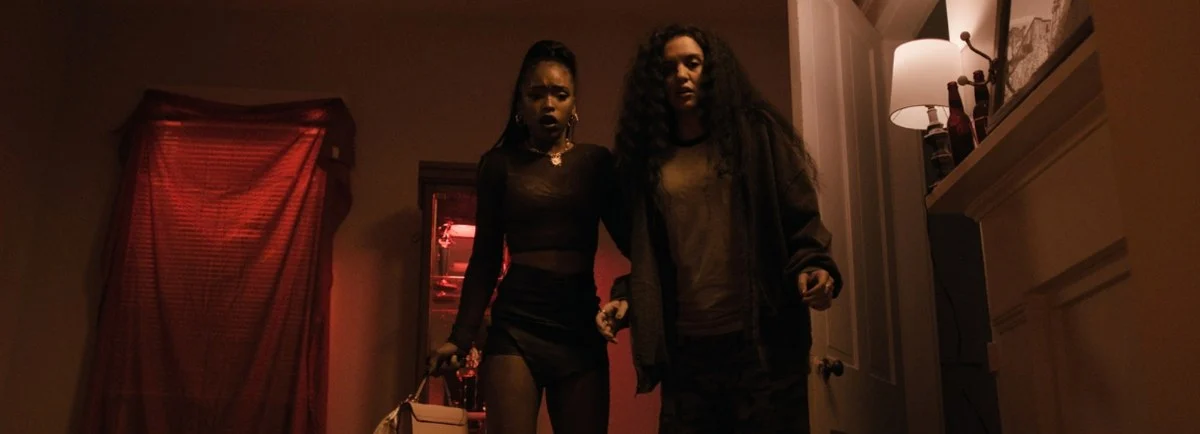
Nite Flirt was born out of a collaboration between myself and my creative partner, Gigi Gustin. We both share a deep love for classic horror and the unforgettable films that shaped the genre, so we set out to create something that felt like a love letter to that era while still telling a story that was our own. Together, we crafted a world inspired by our obsession with late night phone chat lines and the mystery they carried. Gigi then brought that vision to life with a haunting performance that became the emotional heartbeat of the film.
Your film is a delightful love letter to 1980s horror. What films inspired the style of your film?
The Shining, Halloween, A Nightmare on Elm Street, and The Texas Chain Saw Massacre were huge influences. Not because I wanted to imitate them, but because those films understood atmosphere. They let suspense breathe. They trusted the audience. They weren’t afraid of silence or long takes. I wanted Nite Flirt to feel like someone found a dusty VHS tape on a shelf that had somehow slipped through time.
What do you hope the audience will take away from your film?
I hope they have the kind of experience that made me fall in love with horror in the first place. Watching it with a crowd, hearing people laugh, jump, scream, and cheer together, that’s movie magic. If someone leaves the theater wanting to introduce a friend to Nite Flirt the way I was introduced to my favorite horror films, then we’ve done something special.
Voicemail
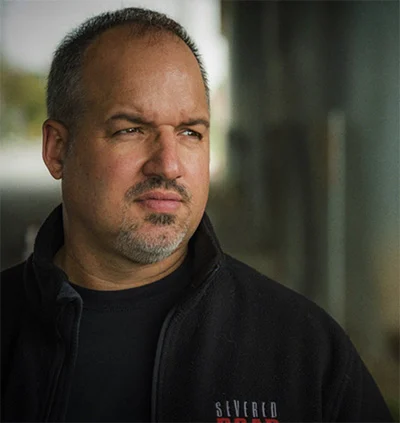
Talent: Benjamin L Brown
Role: Writer/Director/Producer
Which horror movie got you into horror?
Brown: John Carpenter’s The Thing. My folks rented it when I was young and those creatures and effects burned into my very soul. Love that movie and still watch it regularly.
What inspired you to go into filmmaking?
A friend got me into post-production sound, and it snowballed. After seeing how I could create a world within a scene, it was an incredible experience. Had to do it more. The evolution into camera work came when a client wanted to start shooting projects and I had never shot anything before. We bought a camera and FCP7 and made it work. It continued to evolve based on projects, gigs, and finally writing and directing my own feature.
How did you come up with the story for Voicemail?
I knew someone that had a rough time every few months and whenever I tried to help, it seemed to make things worse. This is based on those experiences. Took those experiences, boiled them down, twisted them, and flipped them to the other side.
Voicemail happened because I had a lot of friends out of work at the time. I had a prized possession that was a dream for me and realized I could help my friends if I sold it. I took the money and hired everyone to make a short film.
According to IMDB, you were the director, writer, producer, cinematographer, composer, and editor for Voicemail. What is the biggest benefit and challenge of having so many roles for one project?
Biggest benefit – Less food and toilet paper needed on set. (Cost/Budget)
Challenge – As much as you anticipate problems in pre-production, something finds a way to screw things up. Spend the time needed for everything in pre-production. Can’t rush through that ever.
Think on your feet, make resources available, and find good people that know how to think and work on set to help you get things done.
What do you hope the audience will take away from your film?
Be entertained. It’s a movie.