In this final part of the three part Screaming Room Film Festival filmmaker interviews series, part three, Sunday, we highlight films from a select few filmmakers that show the diversity of horror thought sub genres like art house, musical, comedy, and crime.
We are deeply appreciate and grateful to all of the filmmakers that participated in this phenomenal line up of over seventy short films that made the 2026 Screaming Room Film Festival a blood-soaked success.
Day 3: Sunday
Chatter
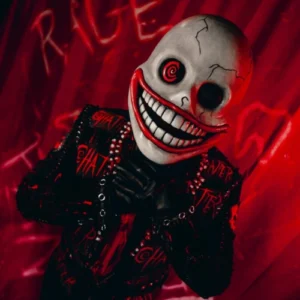
Talent: Samuel Gonzalez Jr.
Role: Writer/Director
How does it feel to have two films playing at the festival this year?
Gonzalez: It’s incredibly rewarding. Every film takes years of work and hundreds of people believing in the same vision, so having two projects screening at the same festival is something I don’t take lightly. What’s even more exciting is that they’re completely different creatively. It gives audiences a chance to see two very different sides of my filmmaking.
How did you come up with the story for Chatter?
The song immediately made me think about the nonstop noise we live with every day. Everyone has an opinion, everyone’s talking, everyone’s trying to be heard. I wanted to turn that feeling into something visual, where the chatter itself becomes overwhelming. It became less about telling a literal story and more about creating an experience that matched the energy of the music.
What inspired you to make a music video?
The inspiration started with the artist himself. Chatter brought me the song and the message he wanted to share, that the voiceless deserve a voice, that bullies don’t have a place, and that music has the power to inspire people to stand up for what’s right. I was immediately drawn to his artistry, his gift, and, most importantly, his heart. My goal as a filmmaker was to take that passion and amplify it visually through my own creative voice. Together, we created something unforgettable that I hope inspires audiences to stand up for others… and scares the hell out of them in the process.
You have some great cameos in your music video. What was it like to have all of them participate?
It was honestly a dream come true. I grew up watching these horror legends, so having them become part of something I directed was incredibly surreal. What meant the most was that they believed in the message and embraced the vision from day one. Watching all of these iconic voices of horror come together alongside a new generation created this incredible collision of past and present. Every moment on set reminded me why I fell in love with this genre in the first place.
What do you hope the audience will take away from your music video?
I hope they have fun with it. Music videos should be something you want to watch more than once because there’s always another detail hiding in the frame. If people leave entertained, discover a new appreciation for the song, and catch something new the second time around, then we’ve done exactly what we set out to do.
Ex
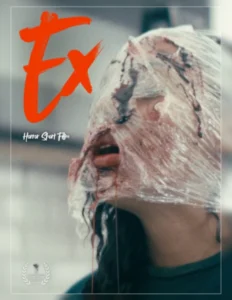
Talent: Chris Vanderhorst
Role: Writer/Director/Producer
Which horror movie got you into horror?
Vanderhorst: As a kid, my dad always let us watch movies with him. I remember doing everything I could to stay up late and see what was playing on HBO. One night, The Exorcist came on. I was maybe nine or ten.
For the first time, I found a movie that was too scary for me, but I didn’t want my dad or my brother to know. So, I hid behind the couch. It only made it worse. Hearing Regan’s voice without seeing the screen let my imagination fill in the blanks. I heard that voice in my head for weeks afterward. And in hindsight, I think I loved every second of it.
What inspired you to go into filmmaking?
I remember when DVDs first came out. I bought Scream and watched it with the audio commentary. Then I watched the behind-the-scenes featurette. I was hooked.
After that, I started renting and buying any DVD that had special features. Seeing what it was like to be on set and how a film came together made something click. I remember thinking, I have to do that.
How did you come up with the story for Ex?
Ex originally started as a story I wrote during COVID for an anthology film I was making with a group of friends. When that project didn’t pan out, I moved on to other shorts. But the story always stayed with me. I loved the idea of someone’s wish coming true, just not in the way they imagined.
I’ve always been drawn to The Twilight Zone and Black Mirror, stories that make you think you know where they’re going before pulling the rug out from under you. That kind of unexpected twist seems to have become my brand at this point.
Your film makes me think of the Asian horror of the late 1990s early 2000s. Was that an influence in the style of your film?
I wouldn’t say it was a direct influence, although maybe subconsciously. Ex is the only film I’ve made that didn’t have a complete script. I woke up one morning feeling down on myself for not submitting to the Jakob Owens Horror Short Film Contest, so I wrote the opening scene and sent it to Elizabeth Beatrice Lambert, who I hadn’t even met in person yet. She said she was in, along with my longtime collaborator Lionel Sam.
We only had three days to shoot, so I basically wrote the film as we were making it. I knew the story well enough that it all came together. That said, I’m not sure there was any direct influence because we were just creating at this fever-dream pace.
What do you hope the audience will take away from your film?
I hope this film gives people something to talk about after the credits roll. I also hope it introduces more people to who I am and the kinds of stories I’m trying to tell. My goal is to meet other filmmakers who want to collaborate and finally make that anthology feature film. Maybe we’ll be premiering it at next year’s Midsummer Scream.
The House Between
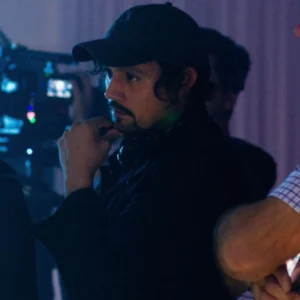
Talent: Ryan Valdez
Role: Writer/Director/Producer
Which horror movie got you into horror?
Valdez: Like many filmmakers, the classic The Evil Dead (1981) was my gateway into truly loving horror. I had seen bits and pieces of horror movies growing up by looking over the shoulders of my older siblings and friends’ siblings, but sitting down and watching Raimi‘s Evil Dead was my “aha” moment. I became completely obsessed. It’s the film that inspired me to start making movies and deep dive into the genre.
What inspired you to go into filmmaking?
Ironically, filmmaking wasn’t the original plan. I wanted to work in animation. As a kid I was constantly drawing frame by frame animations, making flipbooks, and creating stop motion shorts with toys, clay, and a VHS camera.
Without realizing it, I was teaching myself editing, story structure, etc. etc. Eventually I learned how to get footage onto a computer, discovered editing software, and fell down the rabbit hole of visual effects. Pirated After Effects… courtesy of LimeWire, shhh.
At that point I was spending more time making short skits and skate videos leaving animation behind (though I do dabble to this day). Then I saw Evil Dead like I said, and that was it. Evil Dead inspired me, seeing the low-budget film baited me to believe I could do the same with my friends and anyone foolish enough to follow my journey.
How did you come up with the story for The House Between?
The House Between short was based on a flurry of TikTok videos that were spilling into my feed called “Rapturetok” back in September of 2025. Many people seemed to believe the rapture was gonna happen and they would ascend into the skies and live happily ever after or whatever they thought would exist on the other side. People were selling their properties and vehicles and more. It felt cult like and reflected how faith can sometimes be manipulated into something resembling blind devotion and brainwashing.
The short became my commentary on cult mentality, religious extremism, and how deeply people are willing to sacrifice themselves in the name of belief. With that said, in the Bible, there are consequences to your actions that can land you in purgatory, between heaven and hell there is a house between.
The sound design feels like another character in your film. What is the challenge of finding the right amount of sound to create the eeriness of your film?
I take that as a huge compliment because I genuinely love sound design. I think great sound should complement the visuals, but it should also tell part of the story on its own without a visual. I’m not sure I can point to a specific formula or challenge for finding the right balance because it’s a very intuitive process in post.
It’s a discovery with trial and error in the edit. I love using heavy reverb, delays, and droney textures to create a feeling that’s nostalgic, almost like you’re hearing something from a distant memory. I think that quality naturally creates a sense of unease and eeriness.
I’m a very sentimental person, so maybe that’s just my personality finding its way into the sound design. If that emotional quality comes across as another character in the film, then I couldn’t ask for a better compliment.
What do you hope the audience will take away from your film?
Playing follow the leader can really bite you in the ass, blindly following a leader or ideology can have devastating consequences. Be careful who you place your faith in, and make sure your beliefs are guided by your own moral and ethical compass, not someone else’s.
Invasion ‘53
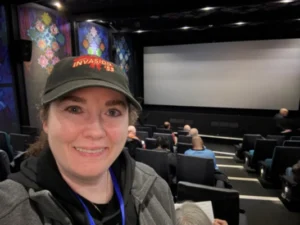
Talent: Danielle Weinberg
Role: Writer/Director/Producer
Which horror movie got you into horror?
Weinberg: I love the sci-fi horror movies of the 1950s. They’re sometimes campy, sometimes scary, and always fun.
What inspired you to go into filmmaking?
My grandfather owned movie theaters and drive-ins, so I grew up watching a lot of movies with him. From an early age, I knew I wanted to tell stories on the big screen. When Jurassic Park was released, it forever changed the way I looked at filmmaking. Seeing dinosaurs brought to life so convincingly made me realize that cinema could make the impossible feel real. It gave me the confidence to believe that anything I could imagine, I could one day bring to life on screen.
How did you come up with the story for Invasion ’53?
I love Star Trek, and the basic concept of Invasion ’53 started as an inversion of a classic setup used on several Star Trek series. In those episodes, the away team has to go undercover on an alien planet to carry out their mission, so they visit the ship’s doctor and—bing, bang, boom—emerge disguised as the local aliens. Inevitably, something goes awry, the aliens realize these visitors are not from their world, and our heroes have to improvise to complete their mission.
I took that classic setup and flipped it: What if Earth were the alien planet? In Invasion ’53, an extraterrestrial has to blend in with humans, arriving at a suburban cocktail party disguised as an ordinary guest. But will the humans realize what’s really going on before it’s too late?
With this film being a love letter to 1950s horror sci-fi, which influenced your film?
The Day the Earth Stood Still, Invasion of the Body Snatchers, and I Married a Monster from Outer Space in particular influenced my film.
What do you hope the audience will take away from your film?
Like the Atomic Age films that inspired it, Invasion ’53 is first and foremost meant to be a fun, entertaining ride—one that also reflects the anxieties of our time. Audiences may find deeper themes to explore, but more than anything, I hope that when the lights go down and my film flickers onto the screen, people can leave the outside world behind and simply enjoy themselves. Movies are entertainment, and I take my job as an entertainer seriously. Over the past year, I’ve had the privilege of traveling to film festivals across the U.S. and overseas, and nothing has meant more to me than hearing an audience laugh together. That’s the experience I hope to share with Invasion ’53.
Monster
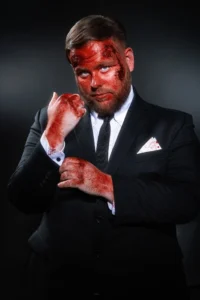
Talent: Matthew Hersh
Role: Director/Producer
Which horror movie got you into horror?
Hersh: I’d have to say the movie that really got me into horror was the original Alien. It was the first horror film that I ever watched and I was instantly hooked.
What inspired you to go into filmmaking?
I just always loved movies as a kid and was fortunate enough to go to Universal Studios and Disney’s MGM at a young age, so I was immersed in the behind-the-scenes aspects of filmmaking. It was actually the Alien scene in The Great Movie Ride that inspired me to watch that film initially
How did you become the director for Monster?
So Rocom and I had a few mutual friends, so we started talking on Instagram after we were supposed to go to horror nights together as a group but neither one of us could make it. He eventually sent me the track for Monster and asked if I would be interested in directing and I was immediately in. I loved the track and wanted to do a fun blood soaked narrative piece that he let me go all out and have fun with.
What was it like to film this at the infamous The 17th Door haunt in Orange County?
Getting to shoot at The 17th door was incredible. Even just walking around during the initial scout and getting the behind-the-scenes tour of the space was so much fun. The sets and space there gave us so much to work with and I’m so thankful to everybody there who helped make it happen.
What do you hope the audience will take away from your film?
I just want the audience to have a good time with it. It’s a fun track and I wanted to match it with some fun bloody and campy visuals.
Mosquito
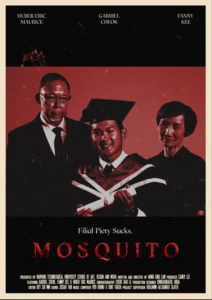
Talent: Bao Le Cheok
Role: Cinematographer
How did you become a part of Mosquito?
Cheok: Mosquito was a project I worked on during my undergraduate years, written and directed by Wong King Lam and produced by Candy Lee. At the time, I had just begun developing a fascination with horror and genre filmmaking, and King’s script immediately stood out. There weren’t many student films exploring horror in Singapore then, so I naturally gravitated towards the project and approached him with ideas for the visual direction.
What resonated with me most wasn’t just the horror—it was the family dynamic at its core.
Having grown up in a typical Singaporean household, where multiple generations lived under one roof, I could immediately relate to the emotional tension within the family. The film explores the pressures of the “sandwich generation,” balancing responsibility towards both parents and children, and I found that to be a uniquely Singaporean story wrapped inside a horror film.
That combination of social commentary and genre storytelling made it a project I knew I wanted to be part of.
Mosquito is longer than Eggsecution, the other film playing this year that you were also a cinematographer for. What are the challenges of creating cinematography for a film with several spaces versus one?
Mosquito was one of the earliest narrative films I shot, so it became a huge learning experience for me. At that point in my career, I was still figuring out everything—from scheduling efficiently to understanding how shots flowed together in the edit. I was beginning to realize that cinematography wasn’t just about creating beautiful images, but about making visual decisions that supported the rhythm and emotional progression of a story.
Compared to Eggsecution, which challenged me to continually reinvent a single location, Mosquito required me to create visual continuity across multiple environments and different times of day. Even within the same apartment, I had to differentiate morning, afternoon, evening, and night while making each stage feel emotionally distinct.
I remember spending a lot of time asking myself, “How do I make this same living room feel completely different from the previous scene?” That meant carefully planning different lighting approaches, colour temperatures, and compositions that evolved alongside the story.
Looking back, it was one of the projects that taught me how much cinematography is really about solving problems creatively. I learned an incredible amount through those conversations with my gaffer and the rest of the crew.
Is it easier for you as a cinematographer to film during the day or at night?
Mosquito was my first experience shooting a horror film that was predominantly set at night, so naturally it came with plenty of challenges. Night cinematography is always a balancing act. You need audiences to see enough to understand what’s happening, but not so much that you remove the mystery and tension. Horror often lives in the shadows, so deciding what to reveal—and more importantly, what not to reveal—became just as important as the lighting itself.
On top of that, the film relied on visual effects for several transformation scenes, which meant I also had to maintain enough exposure and detail for post-production to work effectively. Technically, it was a constant balancing act.
Many of the night scenes were motivated by mosquito lamps and the distinctive orange glow of Singapore’s sodium-vapour streetlights. The mixed-colour temperatures were challenging to control, but they also gave the film a heightened sense of reality that suited its gradual descent into body horror.
That said, daytime cinematography comes with its own set of challenges. If I had to choose, though, I’d say night is more demanding because it requires a greater level of restraint. Sometimes the scariest thing you can do is simply leave something hidden in the darkness, with just that sweet spot of light.
How important is cinematography in the storytelling of this film?
For Mosquito, cinematography was never about making beautiful images, rather it was about building tension. King and I worked very closely throughout pre-production, and we also involved our editor, Shi Min, and our VFX supervisor, Pei Wen, early in the shot-listing process. Because several scenes involved practical effects, blood, and transformations, we had to carefully plan camera placement, movement, and editing rhythms long before we stepped onto set.
One of my favourite aspects of designing the visuals was gradually allowing the film’s language to become more unsettling as the story progressed. The colours became more saturated, the camera movements more deliberate, and the compositions increasingly uncomfortable as the family’s situation spiraled further out of control.
Movement also became an important storytelling tool. Sometimes it was a fast-tracking shot following the protagonist as he fled from his parents. Other times, it was a slow push towards a doorway or an empty corner, allowing tension to build before revealing what had been hiding in plain sight.
Every visual decision ultimately came back to one question: What is the character feeling in this moment, and how can the camera help the audience feel it too?
What do you hope the audience will take away from the film?
I hope audiences walk away entertained—but also a little unsettled. On the surface, Mosquito is a body horror film about blood-sucking mosquitoes and grotesque transformations. But beneath all of that is a story about family, caregiving, and the quiet weight of filial piety that many Asian families understand all too well.
I love genre films because they allow us to explore very real emotions through surreal ideas. The thought of your parents literally transforming into giant mosquitoes is absurd—but the anxiety of watching the people who raised you slowly change as they grow older is something many of us can relate to.
If audiences leave the theatre having enjoyed the horror while also reflecting on their own relationships with family, then I think we’ve achieved exactly what we set out to do!
The Upstanding Millars (of Society)
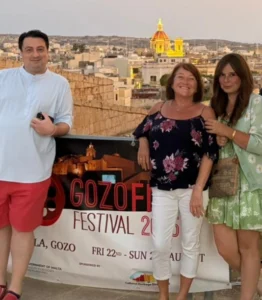
Talent: Franco Rizzo
Role: Writer/Director/Producer
Talent: Laura Chantler
Role: Writer/Producer/SFX Makeup
Talent: Jeanette Smith
Role: Actor/Producer
How did the three of you meet? Was it through this film?
Smith: Laura is actually my daughter-in-law, so we have known each other for many, many years. Through my work as a background actor, I became aware of a couple of fifteen-minute film challenges which happen each year in Malta. One is a horror film challenge where the films are shown on Halloween and the other is comedy film challenge which happens each April Fool’s Day.
Laura told me she loved to write so I asked her to write a comedy for one of the challenges, which she did, and we managed to persuade Franco to help us with this as director and editor. Together we have been fortunate to have produced three successful films to date, with awards for acting, directing, screenplay, best horror and even most incentive death!
You were perfect as Mrs. Millar. When preparing for this role, were you influenced by any particular actor or movie roles?
Smith: That’s very kind of you to say! I knew that the character of Celeste had to come across as someone who was very confident/arrogant, irritating to many, but endearing to those who were in need. There is a character in an old UK TV series called Keeping up Appearances where the female, Mrs. Bucket, pronounces her name as Mrs. Bouquet. This level of falseness suited Celeste very well. I guess I was thinking of that character when playing the role, even adding some of the comedy!
As the writers to the film, how did you two come up with the story?
Chantler: After we had filmed The Clairvoyant, Jeanette mentioned wanting to do a short horror and gave me a starting point of ‘an old couple with a secret’. Jeanette and I have ‘art days’ so I thought something related to that could be fun. The ‘voice’ the Millars were giving me was ‘Upper Class Church Snob’ so I thought I’d run with that.
We sent the first draft to Franco, as we chat often and do share ideas, and he decided to join us. The two-act structure with the media element was something he really wanted to do, and the story naturally developed around that. We do tend to agree on the main points of a story and character, which is always helpful.
Rizzo: The basis and meat (pun NOT intended) of the story is all Laura’s. It’s what roped me in into the project – Jeanette remembers my reaction when she pitched me the movie over coffee! Then we worked together (IIRC) on the horror scenes. I also worked on polishing the screenplay, editing the writing and tightening the structure.
The combination of high art and horror was stunning. How did you create such a bold look?
Rizzo: Laura came up with the concept and much of the paintings’ ideas. I remember wondering how we were going to achieve the torture scene. Luckily enough, we had access to a virtual production studio. We took the chance to check whether it was possible to film the torture scene there as well and they gave us the go ahead – so shoutout Rupture Studios, Malta!
From there the idea of abstracting that scene sprang up, which made sense since the victim, Thomas – the fantastic and very dedicated Jonathan Vella – was heavily drugged. It also opened up a lot of possibilities visually… and whole lot other challenges, but Laura rose up to the occasion with her SFX Make up skills.
I usually try to work out the look of any work I do by watching movies. This time round, the key was giallo. I hope the nods are noticeable enough – there’s also a nod to Michael Haneke’s Funny Games too! – I love Mario Bava’s Blood and Black Lace and its bold colours, which led to the idea of a featureless, liminal deep red space. Cannot not mention Caravaggio too as influence for certain lighting in that sequence.
Chantler: I’ve always been fascinated by Kintsugi and the idea that, when something is broken, it can be made more perfect by embracing its flaws. We wanted to create something that is as beautiful as it is ugly, which is a theme we used throughout. The art, the charity, the Millars themselves – they’re polished but they’re rotten.=
For the look itself we did a lot of practical effects as well as digital effects – plenty of corn syrup, spirit gum and patience! Mrs. Millar makes a joke that painting is a dying art, and everything is ‘computer’. We were lucky enough to be able to utilize a studio to add some of the more surreal imagery – which kind of made her point.
What do you hope the audience will take away from your film?
Chantler: I would love it if, as well as enjoying the film on a surface level, people saw something they recognized beneath that – the abuse of power, the rich devouring the poor. The facades we see daily in life where things look flawless but, every now and again, the filter drops and we see what’s really going on.
Rizzo: I believe this movie falls on the bolder side of “hiding in plain sight”. So first and foremost, we do hope the audience enjoys our short. And then, much in line with what Laura said, I hope audiences see beyond that “fun” element so other ideas will come through – about class, about art, about ever persistent prim, proper, pretty facades hiding the most heinous crimes.