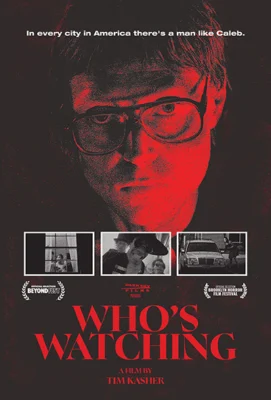
Dark Sky Films latest horror movie, Who’s Watching, turns the familiar fears of stalking and surveillance into an unsettling exploration of what happens when the camera doesn’t show us everything. The official synopsis for the film reads: Eccentric musician and aspiring filmmaker Caleb becomes obsessed with his new coworker, Krista, secretly documenting every aspect of her life in an effort to make her the subject of his latest film. As Caleb’s fixation intensifies, the lines between observer and participant begin to blur, pulling him deeper into a dangerous spiral of surveillance, manipulation and obsession. As the cameras keep rolling, the question becomes increasingly unsettling: who is really watching who?
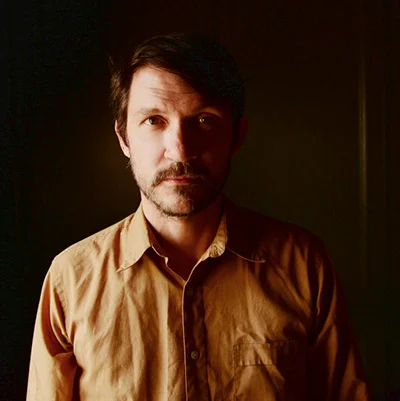
Who’s Watching stars Zachary Ray Sherman (A Desert, Under the Banner of Heaven), whose performance in the film earned him the Best Actor Award at the Brooklyn Horror Film Festival, alongside Gracie Gillam (Superhost, Fright Night), Olivia Luccardi (It Follows, Soft & Quiet), and Steve Berg (Don’t Worry Darling, Tag). The film was written, directed and composed by Tim Kasher. In the interview below, Kasher discusses the creative freedom of the film’s hybrid structure, the connection between obsession and filmmaking, crafting horror without relying on jump scares, and why what lurks just outside the frame can sometimes be far more frightening than what we see.
Details on where you can watch Who’s Watching here.
You’ve described the film as blending found footage with a more omniscient narrative approach. What opportunities did that hybrid structure give you that a traditional horror format wouldn’t have?
First off, working in the found footage realm can completely liberate the crew from dealing with coverage, haha. So that saves a lot of money and time! Financially, that helps the overall production, absolutely. But from a creative perspective, we had a great time playfully – lightly – manipulating the viewer with different perspectives, working with notions of unreliable narrators to gently steer the story, at times, a tad off-course.
The idea of “wanting” seems to be something you connect to the horror of stalking. Can you talk more about the relationship between desire, obsession, and fear in the film?
Developing this story from the perspective of a stalker made a lot of sense to me; we all know how it feels to want something. So that’s dealing with a core response we feel as humans, and from there it was fun to meddle with the viewer, confusing personal wants and desires in relation to this stalker can feel pretty ick. Which was a point I’m hoping to make! I personally couldn’t connect with our stalker, Caleb, and I hope no one can! BUT, I was able to understand his plight by applying my own obsessions and desires to his story: in my situation, I swapped out his female object desire with my personal desire to simply get this film made. So my own drive can(hopefully) be felt in this movie, but it’s the drive of creating a movie, not of stalking. So, that’s my direct relationship with this movie – all the stalking was ‘code’ for the obsession of filmmaking for me.
Without giving away spoilers, is there a particular moment in the film that you were especially excited—or nervous—for horror audiences to experience?
There are some great scenes in the second half that I can’t give away without spoiling!! But yes, there are some other setups in the first half that I’m always excited for viewers to experience, namely, a scene where Caleb spends a bit TOO much time in Krista’s apartment (that’s already a minor spoiler!) and almost gets caught. More than once.
Independent horror often requires filmmakers to turn limitations into creative advantages. Can you point to a particular limitation on Who’s Watching that ultimately led to an unexpected creative choice?
There are a few ‘action’ scenes that we weren’t able to communicate as clearly as intended, and this was a direct result of working on a limited budget. We ended up making those scenes more captivating by having the action occur off screen, with only the audio offering the chilling scene to the viewer. This was absolutely due to low budget filmmaking, but was also a decision I far prefer, and would do again, even if we had an endless budget.
What is scarier to you personally: what you can see clearly on camera or what might be lurking just outside the frame?
Wow, this links directly to the previous question I just answered!! So yes, I think what lurks just outside the frame can be so fraught!! What a fun and effective way to build tension; working with what you can’t see.
Not only are you the writer/director but you are also the film’s composer. How did this come about and how would you describe the film’s score?
I naturally hired myself to compose the film because I’m a career musician. I love working with music and absolutely adore scoring for film. This score/soundtrack was such a blast to work on! I got to write all the metal songs for the fictional band, Toxic Cock Syndrome, and also scored a handful of scenes with agitated, eerie compositions. Total blast.
Were there any classic stalker or surveillance thrillers that influenced the way you approached the tension in Who’s Watching?
Michael Haneke was on my mind a lot while working on this. The way he builds tension and desires to leave the viewer feeling uncomfortable are really influential for me. But also, don’t we learn so much from Hitchcock? He really is a master of suspense, I applied some of his teachings to how I approached Who’s Watching. Absolutely.
Why do you think audiences are still fascinated by stories that blur the line between recorded footage and traditional narrative filmmaking?
These found footage type stories feel so intentionally raw, I think they make these stories feel closer to home, as though they really could be happening in your backyard, next door, all around you. That’s a creepy feeling. I recall watching Blair Witch Project for the first time and though I knew it wasn’t real, the rawness of the footage FELT so real I couldn’t be convinced it was fiction!
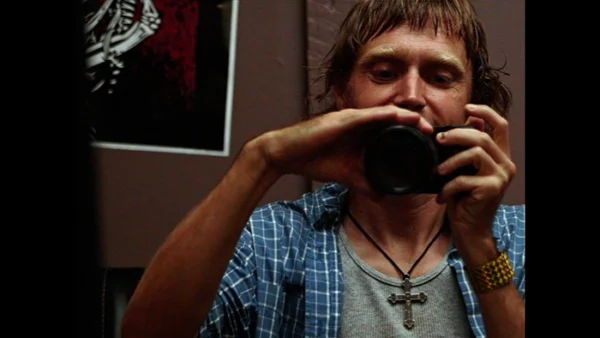
How did you approach building suspense in Who’s Watching without relying too heavily on traditional jump scares?
I actually love a good jump scare, nothing wrong with having some fun with the audience. That said, this story wasn’t really built for jump scares, everything feels a bit too real. Jump scares rarely happen in real life, so I couldn’t very well apply them to this story.
Going back to Hitchcock, he was a big believer in cluing in the audience to what lurks in the shadows – he believed that when the audience is in on the horror, it actually makes them even more invested. Think about ‘Rope’: that film works so well because we KNOW there is danger in the room, in the chest in the middle of the room. If we didn’t know that, there would be nothing to be upset about. That’s how Hitchcock liked to tell stories and that’s how I tell the Who’s Watching story as well: we are always with Caleb, we know the awful things he’s doing and it makes us increasingly more upset.
If Who’s Watching could be programmed as part of a double feature with any horror film, what movie would you choose and why?
I have an answer! ‘Someone’s Watching Me’, the made for TV movie John Carpenter made just before Halloween. It’s a really fun movie and not often seen. It deals with similar stories of voyeurism and is just so much fun.