
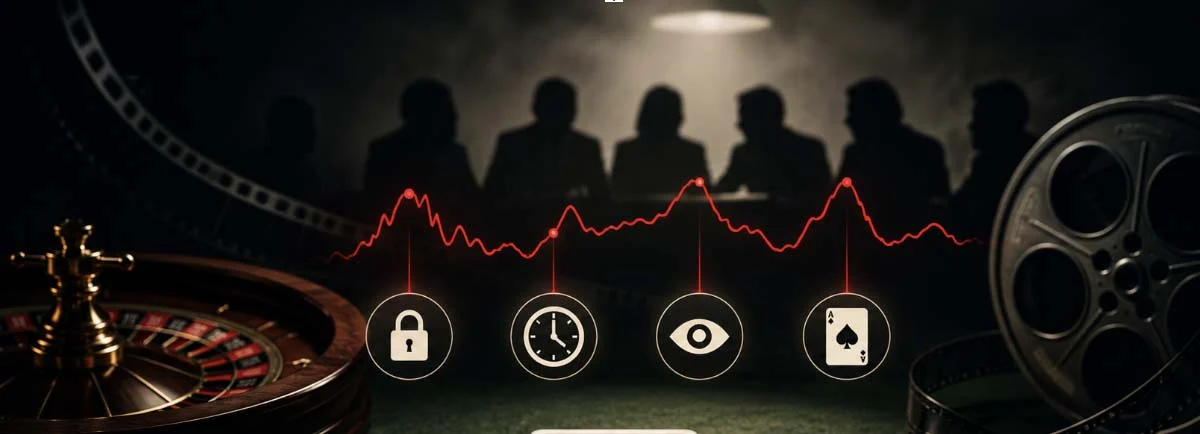
A gambling scene makes a thriller feel colder because the danger becomes visible before anyone is hurt. The table is quiet. The characters know the rules. A card, spin, or pause can change the room. Horror feeds on that uncertainty, where everyone can see the next reveal coming, but nobody can stop it.
A 2019 review of psychological responses to horror films describes horror enjoyment as a mix of fear, pleasure, arousal, and curiosity, which helps explain why these scenes land for genre fans. A card table or roulette wheel gives the audience a question: what happens next? The answer may be ordinary, but in a thriller, that answer can expose a lie, invite violence, or reveal who has been pretending to stay calm.
Where Chance Becomes Suspense
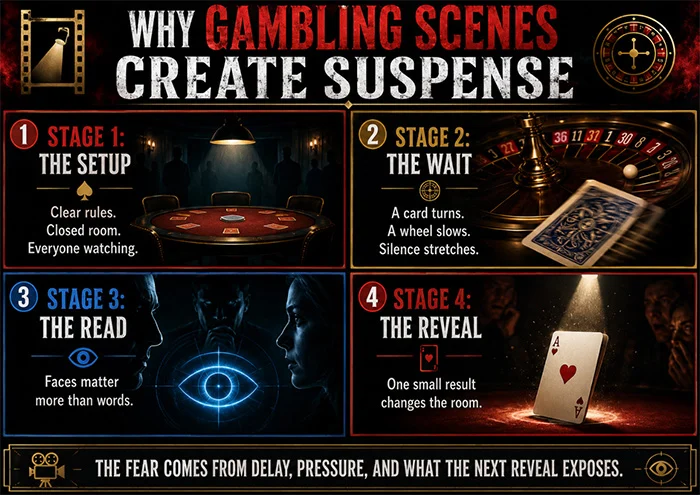
Casino scenes work in horror-adjacent stories because the audience understands the pressure immediately. A closed table has witnesses. Everyone has to wait in public. A dealer, host, or opponent sets the pace. To see the same suspense rhythm outside a movie scene, check out the latest games at Bovada Casino. Here, you can see modern casino formats, where timing and reveal shape the experience: slots, blackjack, roulette, table games, arcade-style games, live dealer options, and newly added releases.
Their relevance here is structural: they make the mechanics of waiting, pacing, and reveal easy to notice. A roulette spin stretches attention through motion. Blackjack makes the next card feel like information arriving in public. Slots use sound, symbols, and a stop-start reveal. Arcade-style formats often compress anticipation into a short burst. Once a horror fan has watched a director turn silence, gesture, and chance into tension, these formats make the same basic rhythm easier to recognize.
BovadaHub’s gambling movie guide gathers All In: The Poker Movie, Casino Jack, Killing Them Softly, and Rain Man into one quick watchlist. The picks move through documentary, crime thriller, and road-movie territory, showing how a table can feel cultural, unsafe, comic, or revealing, depending on the story around it.
The Table Scene Is a Social Trap
The strongest gambling scenes are rarely about the rules alone. They are about who is watching, who is performing, and who has decided that the game means more than it should.
Poker is often the most useful example here because it gives the camera a reason to study faces. A good poker scene lets the audience read tiny betrayals: a stiff jaw, a delayed answer, fingers that stop moving. The suspense comes from the knowledge that one expression, one careless line, or one extra second of hesitation can expose the person who thought they were safest.
Roulette and blackjack build tension differently. Roulette is visual destiny in motion: the ball keeps moving after the decision has already been made. Blackjack is more intimate because each card changes what the character knows in front of everyone else. In horror terms, both formats are compact engines. They hold a question in the open, delay the answer, then force the room to react.
Why the Reveal Feels Like a Verdict
Horror often turns simple systems into traps. A hallway becomes a maze. A phone becomes useless. A friendly gathering becomes a room full of hidden motives. Gambling scenes do something similar with chance. The scene begins with a game, then slowly suggests that the game is only the surface.
That is why private-room gambling scenes are often dimly lit and theatrical. The smaller the room, the more each gesture seems loaded. A laugh can sound rehearsed. A win can look like an insult. A loss can become a debt inside the story. The viewer senses that the numbers, cards, or chips are no longer the real subject. The subject is pride, control, and what happens when someone at the table realizes they have been read.
A horror director does not need a ghost to make that work. The fear can come from social physics. People stay seated because leaving would announce panic. They keep talking because silence would expose them. They smile because the wrong face might make the room move against them. In that sense, the table becomes an economical horror setting: clear rules, close bodies, public pressure, and a reveal no one can pause.
The Last Turn Is the Scare
The gambling scene earns its place in thrillers because it makes suspense physical. The audience can watch the delay. A card has to turn. A wheel has to slow down. A character has to decide whether to speak. Horror likes that timing because it gives fear somewhere to stand.
Used well, these scenes naturally belong inside modern horror. They are pressure chambers for the same questions horror asks again and again. Who is safe? Who is lying? Who understands the rules better than everyone else? What happens when the next reveal arrives?
The best scenes leave a lingering impression: the frightening part was never the game by itself. It was the room becoming still, the character realizing they had fewer choices than they thought, and the audience waiting for one small motion to make everything irreversible, a pattern close to how emotional gratification shapes what viewers choose to revisit in movie-viewing research.
