
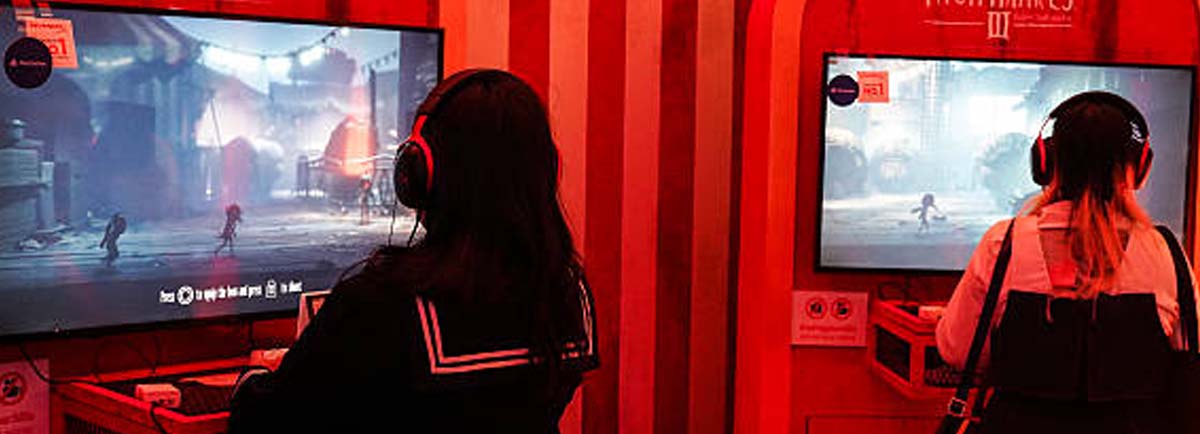
Horror games have always relied on timing, atmosphere and your imagination. Yet, modern hardware has fundamentally changed how those elements come together. The immersive horror games market grew from roughly $8.8 billion in 2024 to nearly $9.8 billion in 2025, reflecting how advanced systems now play a prominent part in delivering fear. Tension is typically carried by constantly running systems beneath the surface; faster processors, advanced graphics pipelines and spatial audio engines guide what you notice, what you overlook and how long unease lingers before something finally breaks the silence.
When you step into a modern horror game, the tension often begins before anything threatens you directly. Here, subtle environmental cues, reactive soundscapes and lifelike lighting work together to keep you alert, second-guessing every corner and every silence. Hardware has become an active participant in fear, influencing how suspense unfolds moment to moment, where you are placed inside an environment that feels unstable, observant and quietly hostile from the very start.
Lighting, shadows and visual realism
Advances in graphics hardware have given horror developers unprecedented control over light and darkness, two of the genre’s most powerful tools. Technologies like real-time ray tracing allow shadows to behave naturally, stretching and shifting as you move through a space. This realism matters because your brain instinctively reads light as information, scanning for threats and inconsistencies. When reflections accurately mirror rooms and flickering lights illuminate just enough detail, developers can create tension without relying on overt scares.
You often find yourself slowing down, watching doorways and corners longer than necessary, because the environment feels believable enough to hide danger. Modern GPUs also handle dense textures and complex geometry, making abandoned buildings, forests and underground corridors feel layered and lived-in. That density gives fear room to breathe, where, instead of sudden shocks, tension builds as your eyes adjust, so your expectations rise, guided by visuals that feel grounded and unpredictable.
Sound design and the psychology of listening
While visuals draw you in, sound is what keeps your nerves tight, so modern hardware supports spatial and binaural audio, allowing sounds to exist in three-dimensional space around you. Footsteps above, breathing behind a wall or distant metallic echoes feel directionally accurate, pulling your attention even when nothing is visible. This precision lets developers use silence as a weapon, knowing that when a sound finally appears, you will react instinctively.
You might pause, turn slowly or hold your breath without realizing it. Outside traditional horror games, similar sensory techniques appear in other digital experiences that rely on mood and immersion. Discussions around atmospheric design often reference examples like the best witch slots, which emphasize layered audio, themed visuals and visual rewards to maintain engagement. Overall, the comparison highlights how modern hardware supports emotional tension across genres by making sound and atmosphere feel deliberate.
Adaptive systems and intelligent fear
Modern CPUs and GPUs also enable horror games to react dynamically to how you play. Instead of fixed enemy patterns or scripted scares, adaptive systems analyze your behavior in real time. Move too confidently, and the game may delay threats, letting tension stretch uncomfortably; proceed too cautiously, and encounters may shift to keep pressure from fading. This kind of responsive design relies on hardware capable of processing AI decision-making alongside rendering and audio without breaking immersion.
As a result, fear feels personal, and you are navigating a haunted space that seems aware of you, where enemies may alter routes, sounds might trigger at unexpected moments and environmental events may unfold differently across playthroughs. That unpredictability keeps you from settling into routines, with the tension coming from knowing that your choices influence what happens next, even if you never fully understand how the system is watching and responding.
Physical presence and virtual reality
Virtual reality represents one of the clearest examples of hardware redefining horror tension. With modern headsets, high refresh rates and precise motion tracking, fear becomes physical: when you turn your head, crouch or lean, the world responds instantly, reinforcing the illusion of presence. In horror, that presence amplifies vulnerability. You cannot rely on distance or a detached camera view; threats feel uncomfortably close.
Haptic feedback in controllers adds another layer, translating impacts, heartbeats or environmental vibrations into physical sensation. Your body reacts before logic catches up, which is exactly what horror aims to provoke. Even outside VR, refined controller feedback and motion sensors enhance immersion on traditional platforms. Ultimately, hardware has made it possible for tension to live in muscle memory and reflexes, beyond simply what you see or hear on a screen.
Where hardware-driven horror goes next
As hardware continues to advance, horror games will likely lean further into subtle, sustained tension. Faster memory, improved AI acceleration and more detailed simulation will allow backdrops to respond to your presence in increasingly nuanced ways. You may notice rooms that change slightly over time, audio that reacts to your stress level or enemies that learn from your habits across sessions. Overall, these developments suggest a future where fear is less about scripted moments and more about long-term unease.
Modern hardware already supports experiences that feel observant and adaptive, so those capabilities are only expanding. For you as a player, that means horror will keep feeling more intimate and less predictable. Looking ahead, the machine behind the game will continue to blur the line between system and storyteller, quietly guiding tension until you realize you have been holding your breath for far longer than expected.
