 We all know the scene. The camera tracks slowly down a dark hallway. A door creaks open. Something is in the dark with teeth gleaming, eyes ablaze as the music swells. We brace ourselves because we think we know what a monster looks like. But what if we’ve got it all wrong?
In real life, and often in the most chilling horror fiction, the monsters don’t foam at the mouth or have blood-soaked claws grinning with crooked fangs. They don’t announce themselves with jump scares or booming scores. Oftentimes, they smile at us and wave at us from across the street. They sit behind us at the movies. They might even offer to walk us to our cars. These are the most terrifying monsters. The ones who look just like people, because they are people, and more so because they’ve convinced everyone else that they couldn’t possibly be anything but a person.
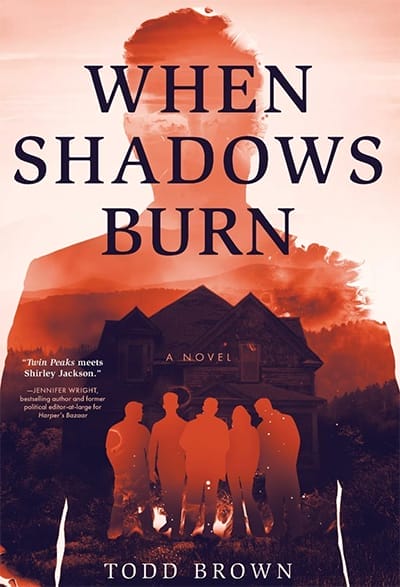
That’s the kind of horror that lives rent free in my head. It’s the space I wrote from when crafting my novel, When Shadows Burn. It’s a Southern Gothic psychological thriller about a small town, buried truth, and the way silence can rot a place from the inside out. There are no spoilers here, just a warning to say, “hey, don’t get too comfortable.” The evil in this book doesn’t live in the shadows. It casts them.
For me, horror has always been most effective when it reflects what we’re afraid to name. The monsters that matter most aren’t the ones who burst through the window with glowing eyes, they’re the ones we willingly invite inside (like Jerry in Fright Night). The ones who groom our trust. The ones who call what they’re doing tradition, or it’s just how things are around here.
Being a neurodivergent parent of a teenage trans son in a conservative part of the South, I learned early that fear doesn’t always come with a mask; it comes with a handshake. Sometimes it drives the school bus, or worse, sometimes it raises you. That’s not fiction, it’s the reality of memory. To be honest, maybe that’s why I don’t need all horror to look supernatural to feel utterly terrifying.
Of course, I love a good ghost story. I’ve stayed up far too late reading about creatures in the walls and girls with wet hair crawling from wells (and loved every second of it). But what gets under my skin, and more importantly, what stays there, is horror rooted in reality. The fear that the system won’t protect my son or maybe even you, dear reader. That people will believe the wrong person. That the worst thing in the world can happen while everyone around you keeps smiling. It’s not the monster, it’s the people willing to carry to the torches.
When Shadows Burn is fiction, yes. But it’s also a love letter to survivors, like my son. It’s about what happens when people finally say, enough. When the so-called monsters end up being mirrors, and the real terror is how long it took for someone to look. At its heart, it’s a story about how some people burn everything down just to keep from being seen, and how others survive that fire and dare to speak anyway.
There’s a moment many horror fans know well. It’s that breathless silence after a scare, where you’re not sure what’s safe anymore. That moment is where my book lives. Not in the slash, but in the stare. Not in what jumps out, but in what’s been standing there all along, quietly waiting for you to notice, like you see in Mike Flanagan’s work.
I think we crave that kind of horror now more than ever. We live in a world where true crime dominates our streaming networks, where real-life monsters are unmasked far too late, and where the lines between safety and danger are always moving. Horror, at its best, can help us face the things polite society tries to ignore. It can force us to look at the wounds we’ve been told to hide. And it can whisper truths we’ve been too afraid to say out loud.
Here’s one of them: real monsters really don’t look like monsters at all. They look like us, they walk among us, and sometimes, they’ve convinced themselves they’re the good guys. But here’s the second truth: survival is its own kind of rebellion. Telling the story anyway has its own power. Horror, at least the kind many of us care about, gives voice to the people the world tried to silence through erasure.
So, if you’re looking for a story that doesn’t flinch, that stares into the dark without blinking, When Shadows Burn might be for you. It won’t give you easy answers or clean escapes. But it will show you what happens when good people stop pretending that monsters don’t exist just because they’re hard to look at. Maybe that’s the real reason we tell horror stories. Not just to frighten, but to reveal. To peel back the wallpaper and see what’s been festering underneath. To call a monster a monster, even if it’s wearing your neighbor’s face, and maybe that’s how we win. Even if it burns.